Do Toyota Camrys Have CVT Transmissions? (eCVT Truth)
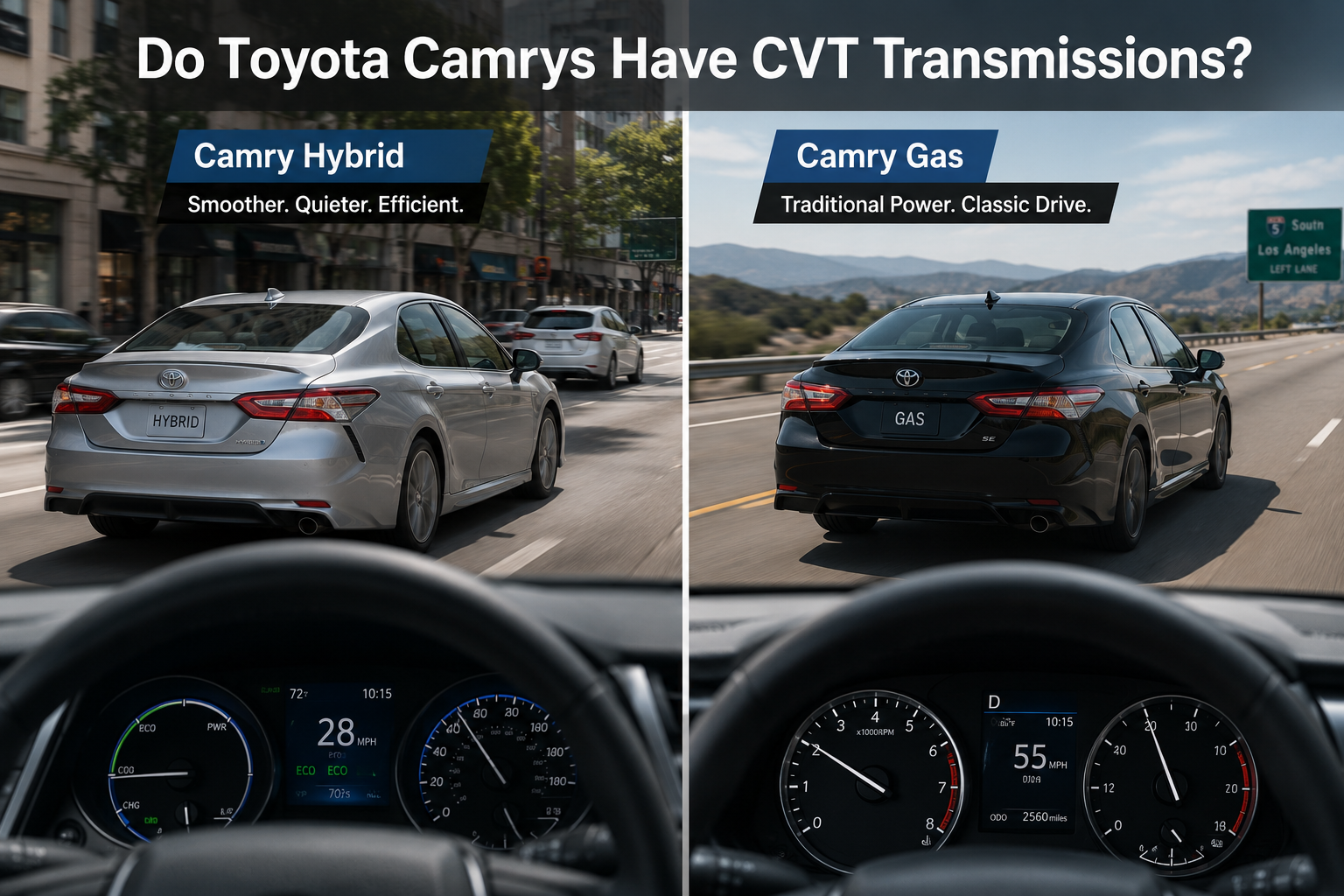
Yes and no. It depends on which Toyota Camry model you are talking about. Gas-powered Camrys mainly use traditional automatic transmissions, while Camry Hybrid models use Toyota’s eCVT hybrid system. Many people confuse eCVT with a normal belt-driven CVT, but they work very differently in real driving.
This guide explains how Toyota Camry transmissions work, which models use eCVT, how reliable the system is, and why many long-term owners trust Toyota hybrid technology more than traditional belt-driven CVTs.
What Transmission Does a Toyota Camry Use?
Toyota has used different transmissions in the Camry depending on the model year and engine setup. Older Camrys mainly used traditional automatics, while newer hybrids use Toyota’s eCVT system.
Toyota Camry Transmission Types by Generation
| Camry Model | Transmission Type |
| 2007 to 2017 Gas Camry | 6-speed automatic |
| 2018 to 2026 Gas Camry | 8-speed automatic |
| 2007 to 2026 Camry Hybrid | eCVT hybrid system |
| 2025 to 2026 Hybrid-Only Camry | Toyota eCVT |
Does the Toyota Camry Hybrid Use eCVT?
Yes. Toyota Camry Hybrid models use an electronic continuously variable transmission called eCVT.
Unlike normal CVTs found in some non-hybrid cars, Toyota’s eCVT does not rely on traditional belts and pulleys. Instead, it uses electric motors and a planetary gear system to manage power smoothly between the engine and battery.
In slow traffic, the electric motor handles much of the low-speed movement, so the car stays quiet and consistent.
In busy city driving, many owners notice the car spends more time in quiet electric operation than they expected.
Is the Toyota eCVT Different From a Normal CVT?
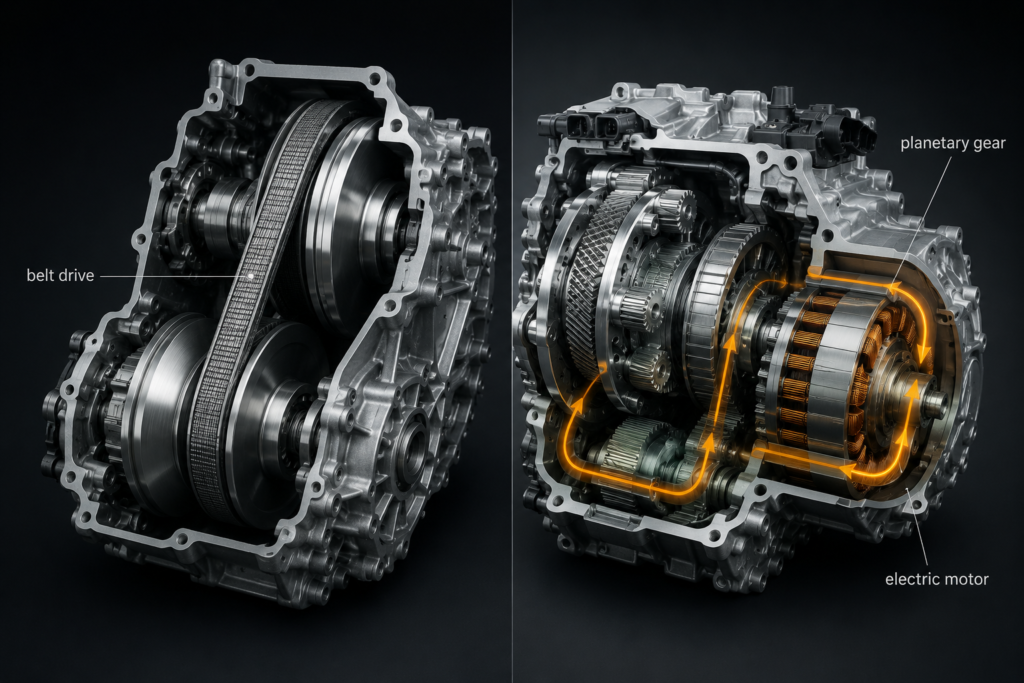
Yes, very different. This is where many online articles confuse people.
A traditional CVT normally uses:
- belts
- pulleys
- variable gear ratios
Toyota eCVT works more like a hybrid power management system than a normal transmission.
Normal CVT vs Toyota eCVT
| Feature | Traditional CVT | Toyota eCVT |
| Uses Belt | Yes | No |
| Uses Pulleys | Yes | No |
| Hybrid-Based | Usually No | Yes |
| Power Delivery | Variable ratio | Power split system |
| Reliability Reputation | Mixed | Generally strong |
That is why Toyota hybrid systems usually avoid many complaints linked to traditional belt-driven CVTs.
Which Toyota Camry Models Use CVT or Automatic Transmissions?
This is where buyers often get confused because “CVT” and “eCVT” are not the same thing.
Quick Camry Transmission Breakdown
| Camry Type | Transmission |
| 4-Cylinder Gas Camry | 8-speed automatic |
| V6 Camry | 8-speed automatic |
| Camry Hybrid | eCVT |
| Older Camry Models | 5 or 6-speed automatic |
Toyota never used a traditional belt CVT in the regular gasoline Camry sold in most major markets.
Why Does the Camry Hybrid Feel Different to Drive?
The driving feel changes because the electric motor reacts instantly when you press the accelerator.
Many first-time hybrid drivers notice the car reacts more continuously in traffic without obvious gear changes. There are no normal gear changes during low-speed driving, so acceleration feels more continuous than in a regular automatic sedan.
You Notice It Most During:
- Stop-and-go traffic
- Slow city driving
- Parking lot movement
- Low-speed acceleration
Why Does the RPM Stay High in a Camry Hybrid?
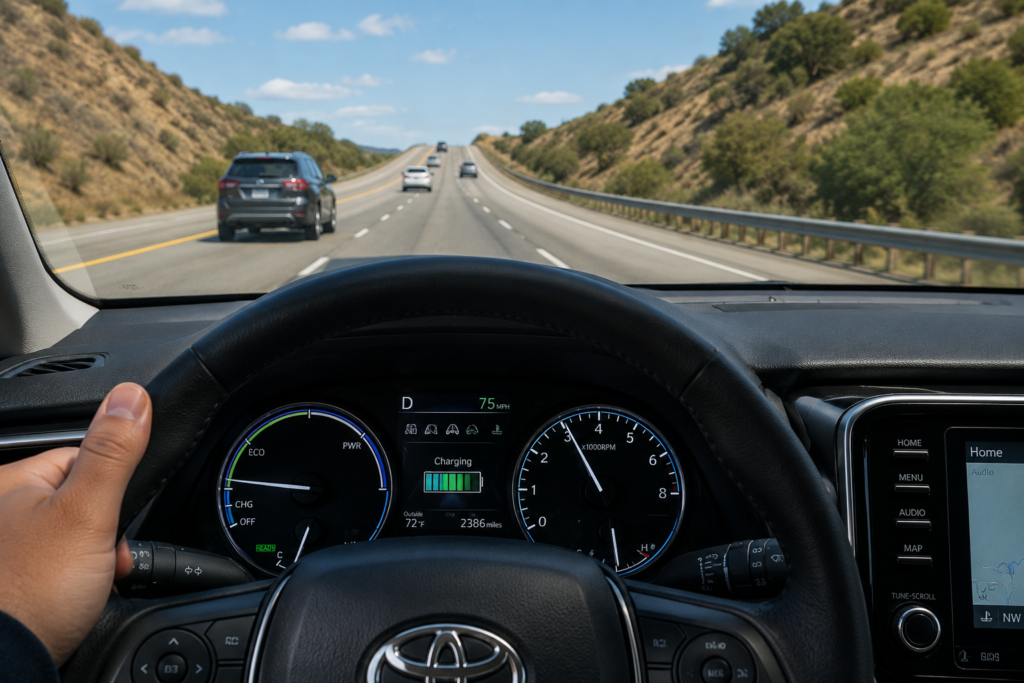
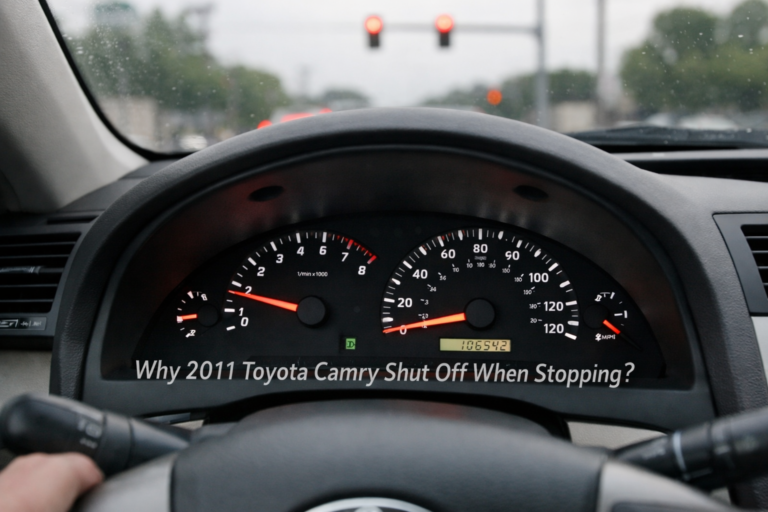
The first time you drive a Camry Hybrid, the engine sound can feel unusual because the RPM does not always match the road speed like a normal automatic.
In reality, the engine RPM and road speed are not always directly connected in Toyota’s hybrid system. Sometimes the engine revs higher because it is:
- charging the battery
- helping the electric motor
- climbing hills
- supporting hard acceleration
The transmission is usually not slipping.
Toyota hybrids intentionally manage engine RPM differently to balance battery charging and fuel efficiency.
Also Read: What Is EV Mode on a Toyota Camry?
What Happens Inside Toyota eCVT During Highway Driving?
At highway speeds, the gasoline engine becomes more active because it operates more efficiently during long-distance cruising.
Compared to older hybrids, newer 2023 to 2026 Camry Hybrid models stay quieter and more stable during long highway driving.
Highway vs City Behavior
| Situation | What Happens |
| City Traffic | More electric driving |
| Highway Cruising | The engine works more directly |
| Passing Cars | Engine + electric boost |
| Long Uphill Roads | Higher sustained RPM |
Is the Toyota eCVT Reliable Long-Term?
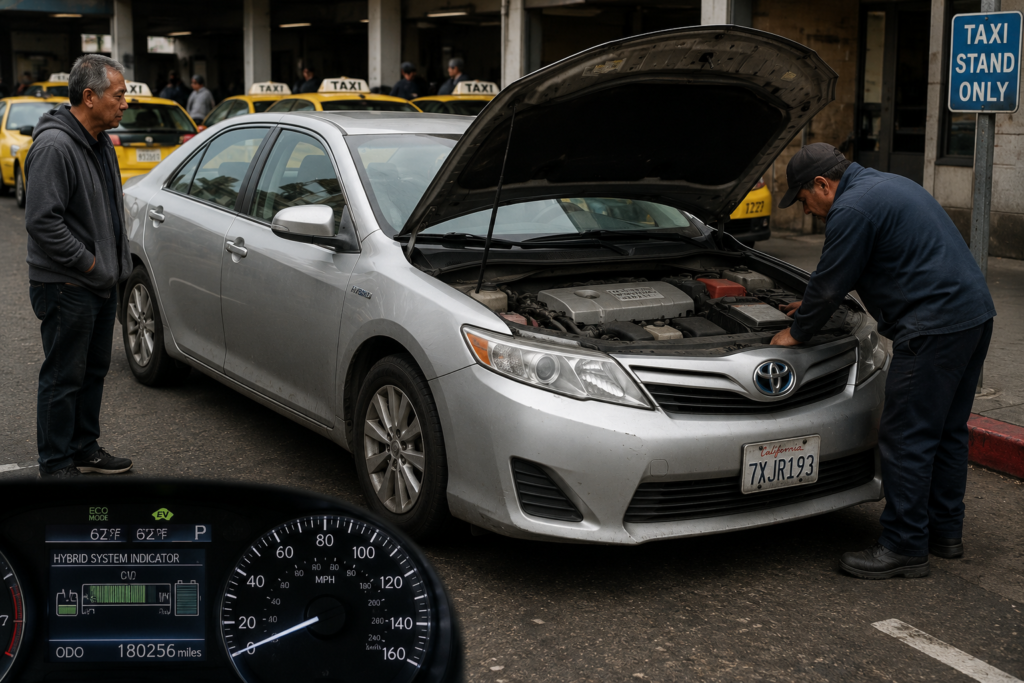
Yes. Toyota’s eCVT system has one of the strongest reliability reputations in the hybrid market.
One major reason is simplicity. Toyota’s hybrid system avoids many wear items found in normal belt CVTs.
Why Toyota eCVT Has Strong Reliability
- No traditional CVT belt
- Fewer moving parts
- Lower transmission stress
- Proven hybrid system history
- Used successfully across multiple Toyota hybrids
Taxi fleets and high-mileage commuters have helped build Toyota’s strong hybrid reliability reputation over the years.
With proper maintenance, Toyota eCVT systems usually hold up very well even at higher mileage.
Does the Gas Toyota Camry Use a CVT?
No. Modern gasoline Toyota Camry models mainly use traditional 8-speed automatic transmissions.
A lot of people assume every fuel-efficient Toyota uses a CVT, but that is not true for the regular gas Camry.
Gas Camry Transmission Setup
| Model | Transmission |
| 2018–2024 Gas Camry | 8-speed automatic |
| 2025–2026 Camry | Mostly hybrid eCVT |
| Older Gas Camry | 5 or 6-speed automatic |
The confusion mostly comes from Toyota hybrids using eCVT terminology.
Is Toyota eCVT Better Than a Traditional CVT?
For many drivers, yes.
Toyota eCVT systems usually work more consistently in traffic and have a better reliability reputation than many traditional CVTs used by other brands.
Why Many Drivers Prefer Toyota eCVT
- Smoother low-speed driving
- Better hybrid fuel economy
- Strong long-term reliability
- Fewer belt-related concerns
- Better city-driving refinement
Some people still dislike the steady RPM sound during acceleration, but most owners adapt quickly.
What Are the Biggest Toyota eCVT Myths?
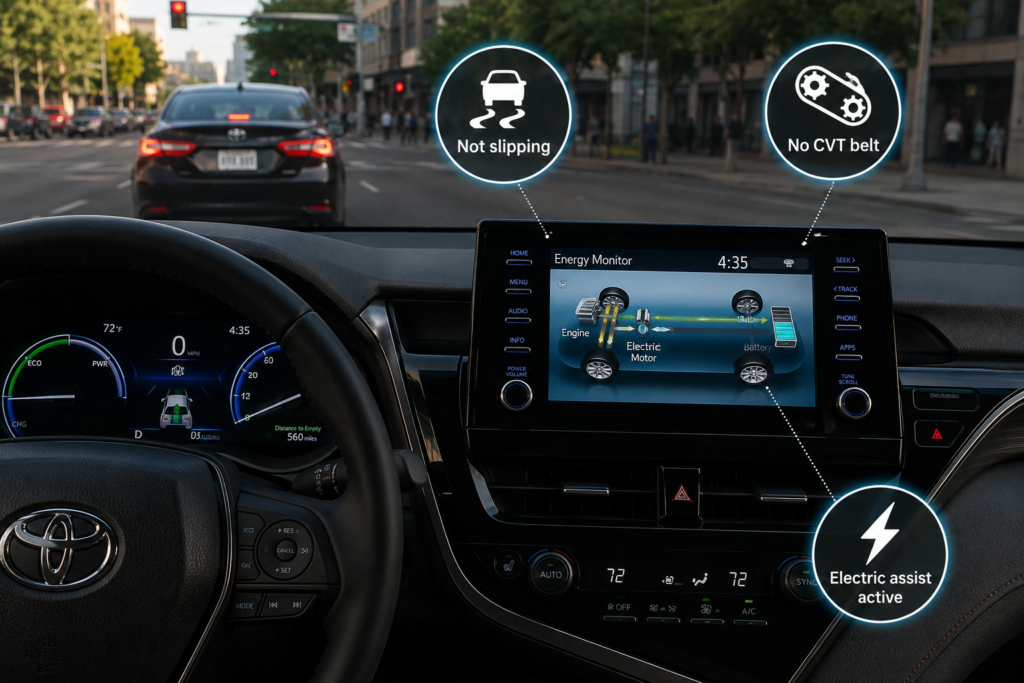
Many myths come from confusion between Toyota eCVT systems and older belt-driven CVTs.
Common Toyota eCVT Myths
Toyota eCVT uses a normal CVT belt.
It does not. Toyota’s hybrid system works differently from a traditional belt CVT.
The transmission is slipping.
High RPM behavior is usually normal in hybrid operation.
Hybrid Camrys feel slow.
In reality, electric torque helps the car react quickly to traffic lights.
eCVT systems fail easily.
Toyota hybrids generally have a strong long-term reliability reputation.
A lot of online criticism comes from drivers who have never owned a Toyota hybrid long term.
Read Guide: What Year Toyota Camry Should You Avoid?
Is the Toyota Camry Transmission Good in 2026?
Yes. The newer Camry transmission setups are far more refined than older systems from years ago.
Compared to older Camry generations, Toyota’s newer hybrid setup improves:
- fuel efficiency
- power delivery
- traffic driving comfort
- highway refinement
FAQs
Does Toyota eCVT Use Belts?
No. Toyota eCVT systems do not use traditional CVT belts or pulley systems like many regular CVTs.
Is the Toyota eCVT Expensive To Repair?
Major repairs can still cost money, but Toyota eCVT systems are generally known for lower long-term failure rates than many traditional CVTs.
Why Does the Camry Hybrid Sound Like It Is Revving?
The engine sometimes holds higher RPMs to charge the battery or support extra power during acceleration. That behavior is usually normal in Toyota hybrid systems.
Which Camry Years Avoid CVT?
Most gasoline Toyota Camry models avoid traditional CVTs because they mainly use standard automatic transmissions instead.
Does the Toyota Camry Have a Real Automatic Transmission?
Yes. Gas-powered Camry models mainly use traditional automatic transmissions, while hybrid Camrys use Toyota’s eCVT hybrid system instead.
Conclusion
Toyota Camry transmissions depend on the model you choose. Gas Camrys mainly use traditional automatics, while hybrids use Toyota’s reliable eCVT system. Although many people confuse eCVT with normal CVTs, Toyota’s hybrid setup works very differently. For daily driving, newer Camry transmission systems feel easier to live with than many older midsize sedans.