Toyota Camry Gas Type: What Fuel Does It Really Need? (Fuel Smart)
Toyota Camry Gas Type: What Fuel Does It Really Need? For example, a driver using premium in a 2.5L Camry for a year may spend $300 more with no benefit. Always check your fuel door or owner’s manual, but in most cases, regular gas is the correct choice.
In this guide, we will explain which type of gas the Toyota Camry requires and how to choose the right option for your specific model year and engine.
What Is the Correct Gas Type for the Toyota Camry?
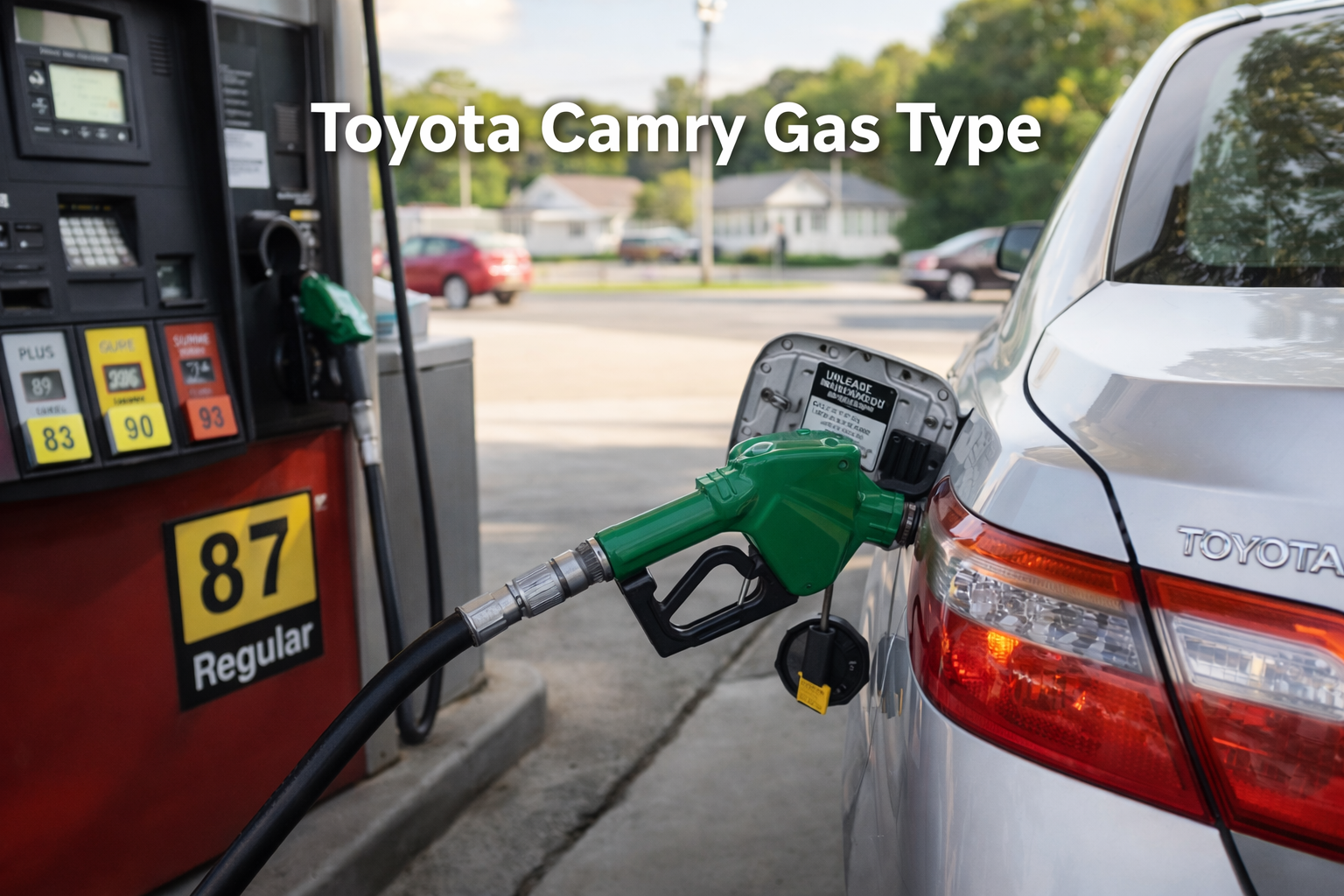
Most Toyota Camry models use regular unleaded gasoline (87 octane). You do not need premium fuel for normal driving. Using higher-octane fuel usually does not yield benefits.
For everyday commuting, school runs, or highway trips, 87 octane is the correct and cost-effective choice.
What Octane Rating Does the Toyota Camry Require?
For example, the 2.5L 4-cylinder engine has a 13:1 compression ratio and is optimised for 87 octane. A higher octane rating is unnecessary because the engine is tuned to prevent knocking via its knock sensors and ECU timing.
Toyota’s knock sensors and ECU timing are calibrated for regular gas. Higher octane does not unlock hidden power because the compression ratio does not demand it.
For more on octane basics and why regular is often enough, See Toyota’s official guide to octane ratings.
Does the Toyota Camry Need Premium Gas?
Even the V6 and hybrid trims run efficiently on 87 octane.
Key points:
- 2.5L 4-cylinder: regular 87 octane
- 3.5L V6: regular 87 octane
- Camry Hybrid: regular 87 octane
Premium fuel benefits only engines designed for high compression ratios or turbocharging, where additional knock resistance is required. The Toyota Camry’s naturally aspirated engines are not built this way, so higher-octane fuel provides no real advantage.
The Camry’s ECU does not advance ignition timing to benefit from premium fuel. As a result, using 91 or 93 octane will not unlock additional horsepower or improve efficiency.
In real-world driving, the fuel economy difference between regular and premium is typically 0–1%, which is too small to justify the higher fuel cost.
Does Premium Gas Improve Performance or MPG in a Camry?
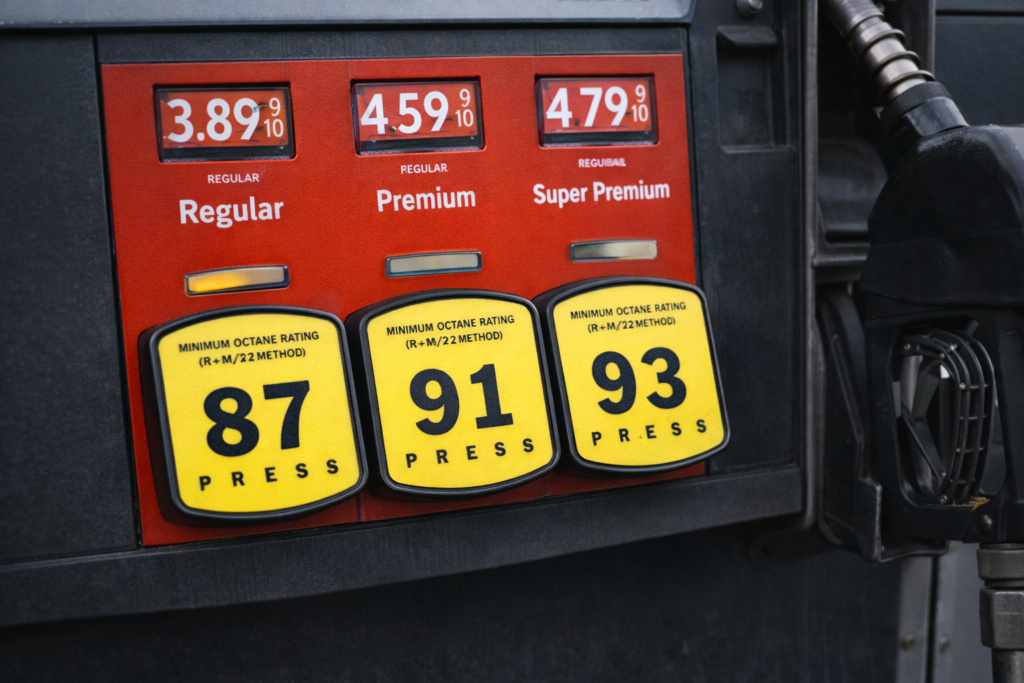
Premium fuel does not meaningfully improve performance or fuel economy in a stock Camry. The engine is not tuned for high-octane combustion, so it cannot take advantage of the extra knock resistance.
| Fuel Type | Avg Price per Gallon | Annual Cost (15,000 miles) | Notes |
| Regular 87 | $3.50 | $1,800 | Recommended |
| Premium 91 | $4.00 | $2,100 | Not needed |
| Premium 93 | $4.20 | $2,205 | No benefit |
As the table shows, premium fuel costs significantly more with no MPG or performance advantage.
Unlike the Camry, some Honda Accord trims may benefit slightly from higher octane due to different compression ratios.
What Gas Does Each Toyota Camry Engine Use?
Nearly every engine in the Camry lineup is optimised for 87 octane regular gasoline.
| Engine Type | Recommended Gas | Premium Required? |
| 2.5L 4-Cylinder | 87 Octane (Regular) | No |
| 3.5L V6 | 87 Octane (Regular) | No |
| Camry Hybrid | 87 Octane (Regular) | No |
Every modern Camry engine is engineered to run on regular unleaded fuel. Even the sportier TRD trim performs efficiently without the premium package.
Even the modern hybrid Camry runs efficiently on 87 octane with no premium needed confirm the specs in Toyota’s brochure: 2025 Toyota Camry official specifications and features.
If you are choosing a model for better traction in rain or snow, read Is Toyota Camry AWD? to understand which trims actually have all-wheel drive.
2.5L 4-Cylinder:
This is the most common engine in the Camry. It runs perfectly on 87 octane and delivers strong fuel economy without needing higher-grade gasoline.
For example, fueling a 2.5L Camry for 15,000 miles annually with regular costs about $1,800, while premium would add $300–$400 in extra costs with no benefit.
3.5L V6:
Even though it produces more horsepower, the V6 is still tuned for regular fuel. Toyota did not design it with a compression ratio that requires premium. Even the V6, despite its higher horsepower, will incur similar costs and see no fuel-efficiency gain when premium fuel is used.
Camry Hybrid:
The hybrid system pairs a gasoline engine with electric motors. It still uses 87 octane and is optimised for efficiency, not high-octane performance.
Has the Toyota Camry Gas Type Changed Over the Years?
| Year Range | Engine | Recommended Gas | Premium Needed? |
| 2000 to 2005 | 2.4L / 3.0L V6 | 87 octane | No |
| 2006 to 2011 | 2.5L / 3.5L V6 | 87 octane | No |
| 2012 to 2017 | 2.5L / 3.5L V6 | 87 octane | No |
| 2018 to 2025 | 2.5L / 3.5L V6 / Hybrid | 87 octane | No |
As shown, Toyota consistently recommends 87 octane across nearly all trims and years, reinforcing that premium is not needed for normal driving.
If you own a very old model, checking the manual is still smart, but premium has rarely been mandatory.
Check similar official fuel info here: Toyota Owners fuel requirements example.
Can the Toyota Camry Use E15 or E85 Fuel?
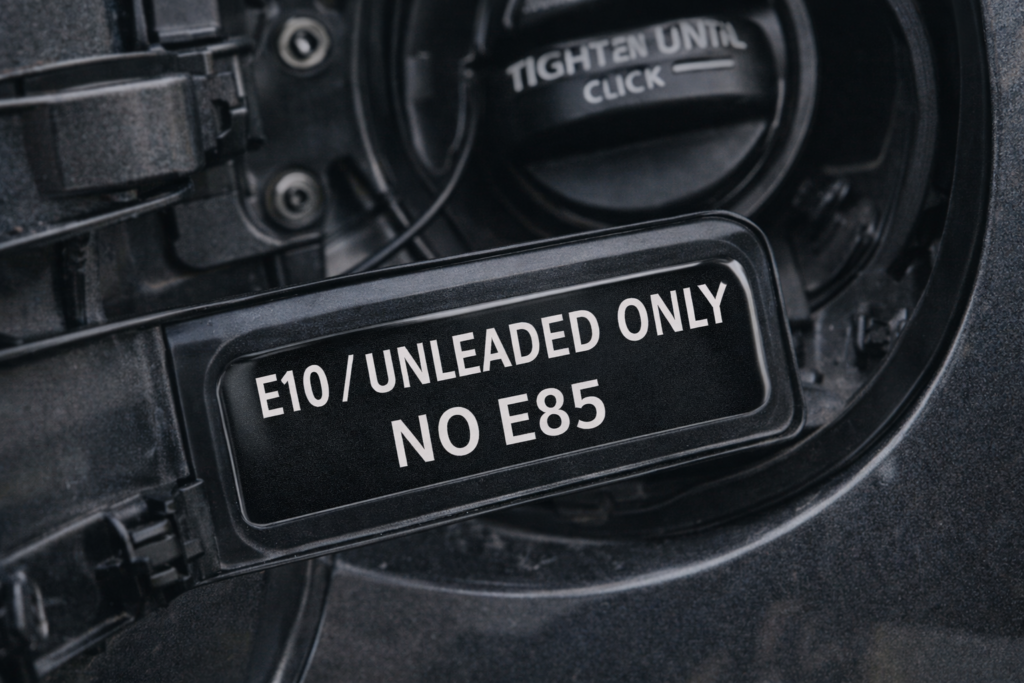
All Toyota Camry models are safe with E10 fuel. Some newer models may support E15, but always check the fuel door or owner’s manual. E85 should only be used in flex-fuel versions.
- E15 is generally safe for modern models.
- E85 should not be used unless your vehicle states flex-fuel capability.
- Using high ethanol fuel in a non-flex Camry can cause drivability issues.
Always confirm using your fuel door label before experimenting.
Note: E15 is legal in most states and safe for modern Camrys, but E85 should only be used in flex-fuel versions.
What Happens If You Use the Wrong Gas in a Camry?
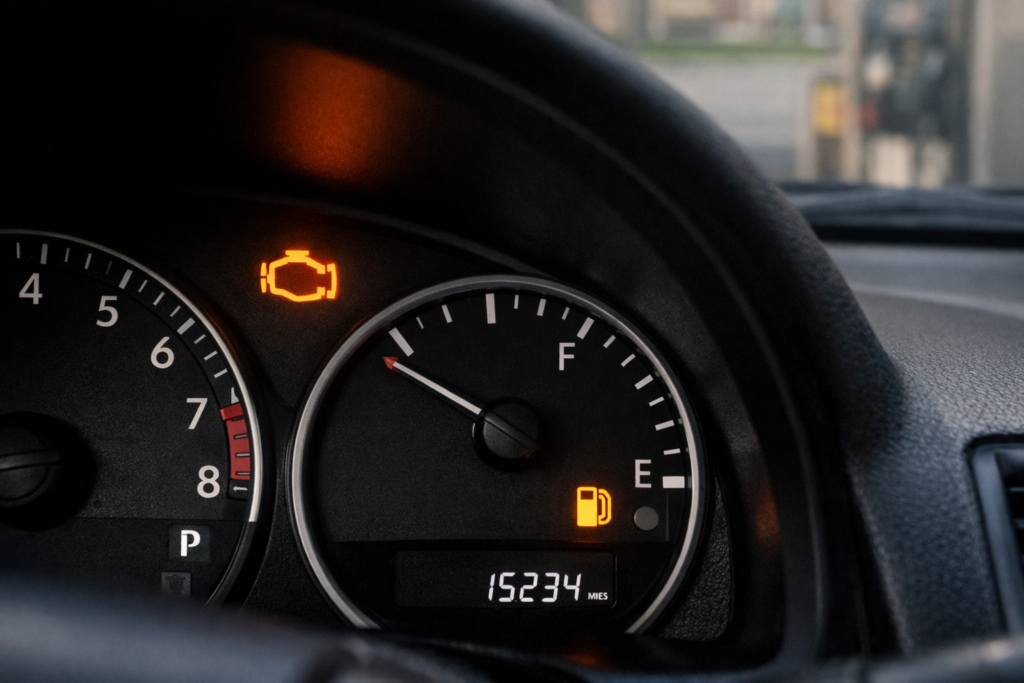
If you accidentally use premium instead of regular, nothing harmful happens. The engine will adjust automatically.
If you use lower octane than recommended (rare case), you may notice:
- Engine knocking or pinging
- Slight performance drop
- Reduced efficiency
Long-term use of low-octane fuel may cause ECU timing retard and a slight power loss. Premium fuel causes no damage but gives no benefit.
Modern Camrys have knock sensors that protect the engine, but repeated misuse is not advised.
Sometimes fuel quality or combustion issues can even cause stalling in older models. If your engine shuts off at stops, read Why 2011 Toyota Camry Shut Off When Stopping?
How Can You Check Your Camry’s Recommended Fuel?
The fastest way to confirm your fuel type is simple:
- Check the inside of the fuel door.
- Read the owner’s manual.
- Look up your model year on Toyota’s official website.
Toyota clearly states the required octane level. If it says 87, there is no reason to pay for 91 or 93.
When Premium May Help
Although premium fuel is unnecessary for a stock Camry, there are a few rare situations where it might make a small difference:
- Extreme heat under heavy load: Long uphill drives, full passengers, or heavy cargo in very hot weather can slightly increase knock tendency.
- Carbon buildup in older engines: Deposits can slightly increase compression, sometimes reducing mild pinging when higher-octane fuel is used.
- Occasional knocking or pinging: If you hear a light knock on regular fuel, try one tank of premium to smooth combustion.
- Tuned or modified engines: Performance tuning or forced-induction setups may require higher octane, depending on the tune.
For normal daily driving, however, regular 87 octane remains the correct and most cost-effective fuel choice.
FAQ’s:
Does the Toyota Camry use regular gas?
Yes, nearly all Camry trims run on 87 octane regular gas.
Can I use premium gas in a Toyota Camry?
Premium can be used, but would not increase power or mileage.
What octane rating is recommended for a Toyota Camry?
Toyota generally recommends 87 octane for both 4-cylinder and V6 Camry engines.
Can the Toyota Camry run on E15 fuel?
Most modern Camry models can safely use E15, but E85 should only be used in flex-fuel versions.
Does the Toyota Camry require premium gas for better performance?
No, the engine is not tuned for premium fuel, so higher-octane fuel does not improve performance.
Conclusion:
In summary, the Toyota Camry is engineered to run efficiently on regular 87 octane gasoline, making it affordable and practical to own. Premium fuel is not required for standard models and does not improve performance. Always follow the manufacturer’s recommendation to protect your engine and avoid unnecessary fuel costs.