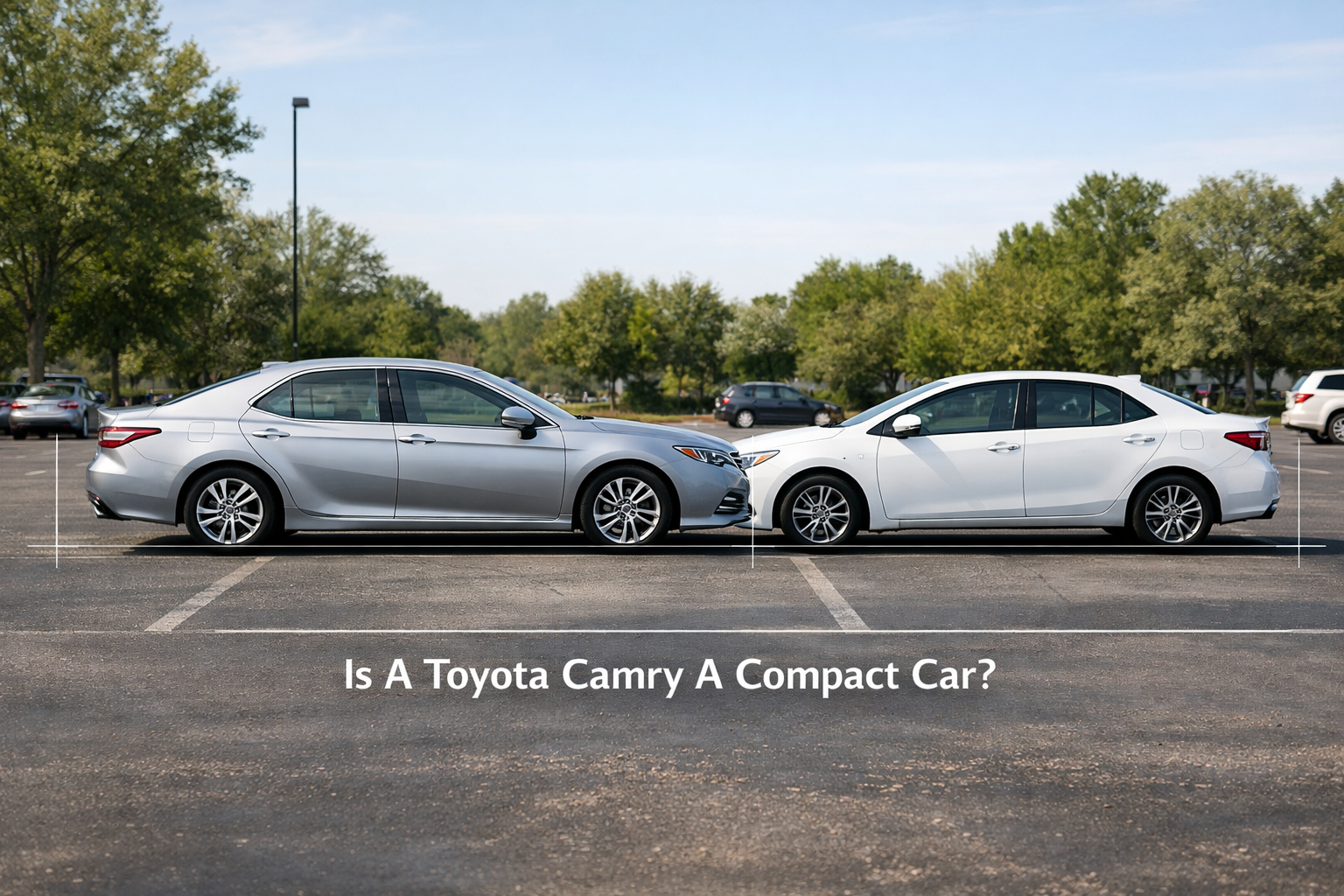
Is A Toyota Camry A Compact Car? (Compare Sedan Sizes)
Many buyers assume the Toyota Camry is compact, but under official U.S. EPA passenger-volume standards, it is classified as a midsize sedan. Its larger interior space, longer wheelbase, and overall footprint place it above compact size limits.
In this guide, we discuss is a Toyota Camry a compact car and explain what that classification means for buyers.
How Does The EPA Define Compact vs Midsize Cars?
The Environmental Protection Agency (EPA) classifies cars based on interior passenger volume (combined front and rear seating space).
- Compact car: 100–109 cubic feet
- Midsize car: 110–119 cubic feet
Cargo space can influence total interior volume, but passenger space is the primary factor.
This means two cars may look similar externally but fall into different segments depending on measured interior dimensions. Classification is mathematical, not subjective.
According to official EPA vehicle size classification data, passenger volume remains the primary metric used to distinguish compact, midsize, and full-size sedans in the U.S. market.
What Is The Camry’s Official EPA Size Classification?
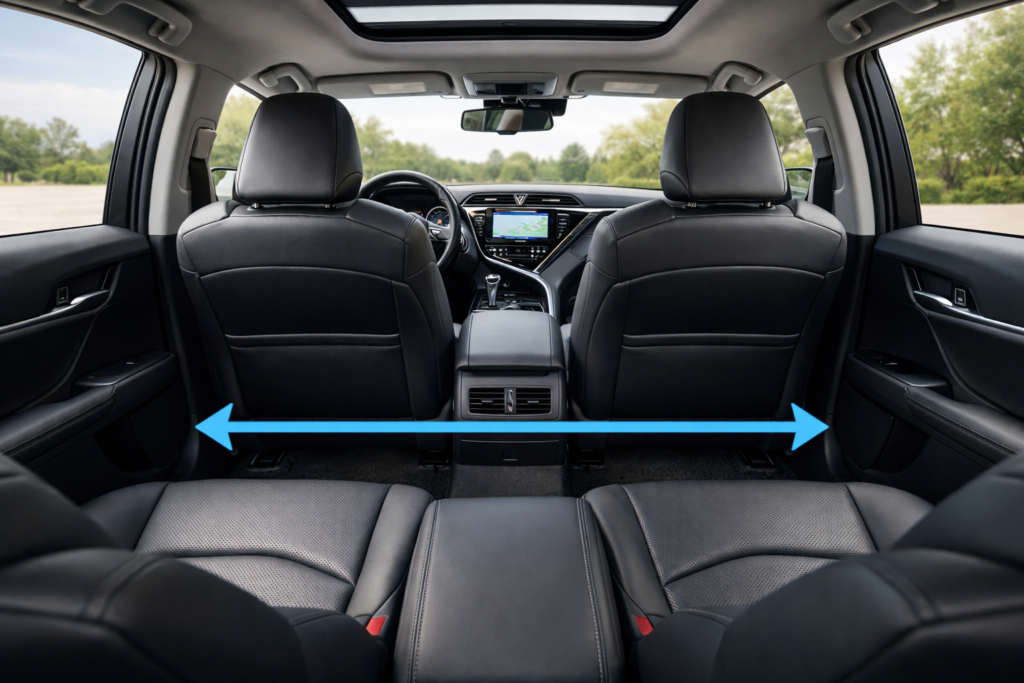
Under federal size standards, the Camry falls within the midsize sedan category based on its measured interior volume.
Recent generations (2018 to 2024) and the redesigned 2025 to 2026 hybrid-only model measure approximately:
- Passenger volume: 100–104 cubic feet
- Total interior volume (passenger + cargo): 115–118 cubic feet
- Overall length: 192 inches
- Wheelbase: 111.2 inches
Because the Camry’s total interior volume exceeds 110 cubic feet, the Camry qualifies as a midsize vehicle under federal classification standards.
It rides on Toyota’s TNGA-K platform, which underpins other midsize vehicles, not on TNGA-C, which underpins compact models.
How Does The Camry Compare To Compact Sedans?
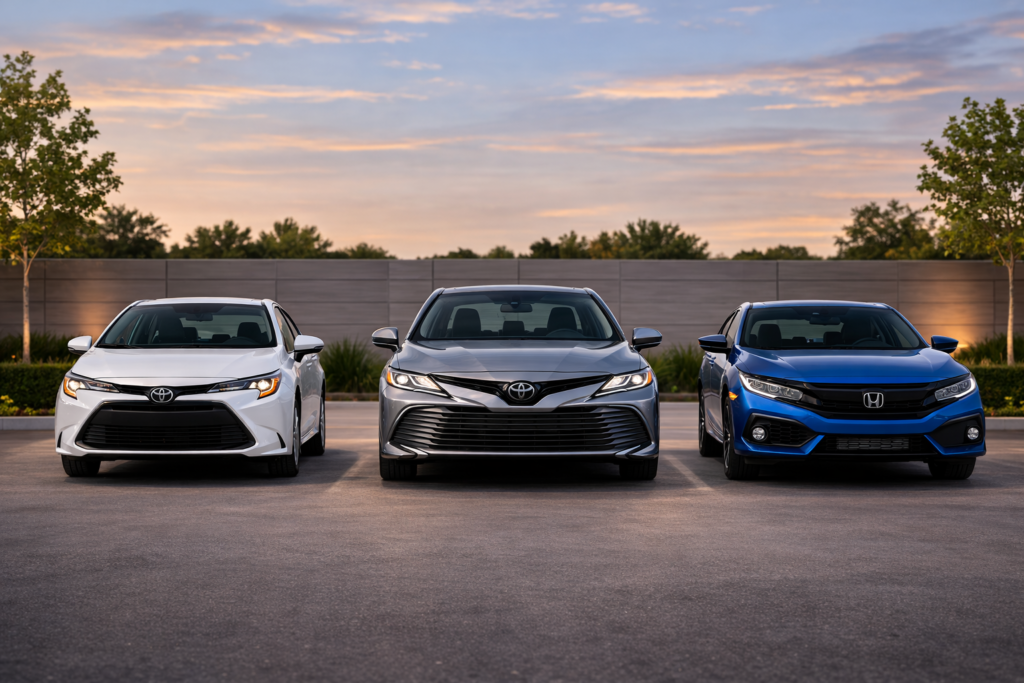
Here is a direct size comparison:
| Model | Length | Wheelbase | EPA Class |
| Toyota Corolla (2026) | ~182 in | 106.3 in | Compact |
| Honda Civic (2026) | ~184 in | 107.7 in | Compact |
| Toyota Camry (2026) | ~192 in | 111.2 in | Midsize |
While compact sedans prioritize efficiency and smaller exterior dimensions, midsize sedans like the Camry offer a balance between daily drivability and interior comfort. This places the Camry firmly in the midsize sedan segment, comparable to other U.S. midsize models rather than compact entries.
The Camry is roughly 8–10 inches longer than typical compact sedans. That additional length translates to:
- More rear legroom
- Wider cabin space
- Larger trunk capacity
In real-world driving, rear passengers experience noticeably more comfort compared to compact models.
Also Read: How Much Horsepower Does a Toyota Camry Have?
Is The Camry Bigger Than The Corolla?
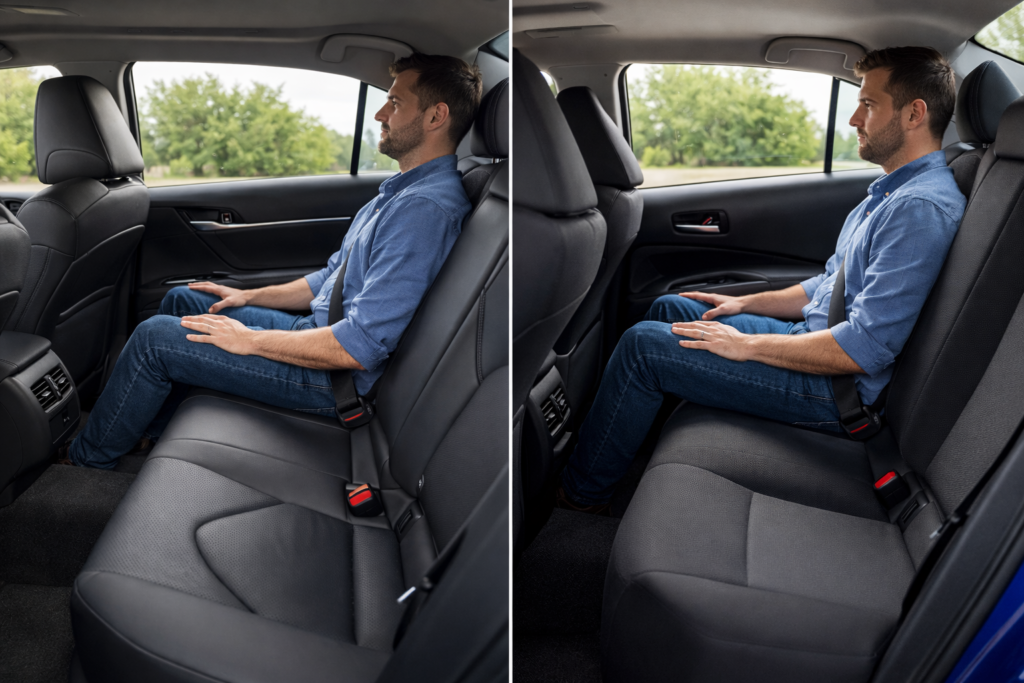
Yes, significantly.
Compared to the Corolla, the Camry offers:
- More rear legroom
- A longer wheelbase
- A wider body
- Greater trunk capacity
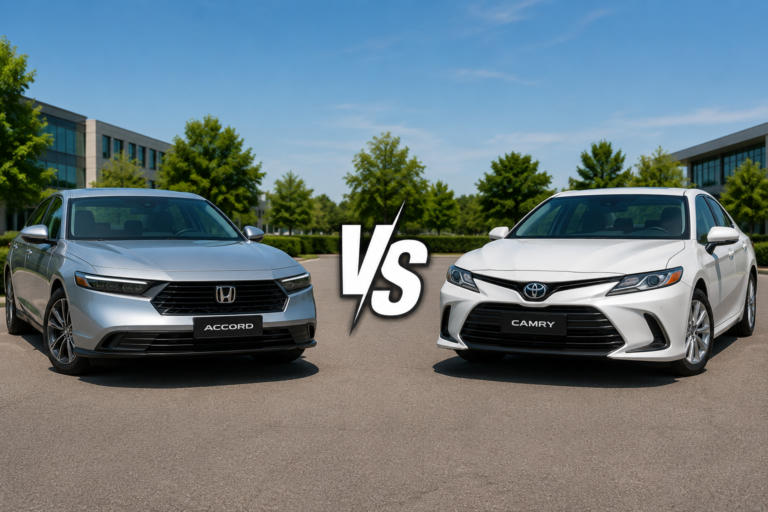
Park them side by side, and the segment difference is obvious. The Corolla fits the compact category, while the Camry clearly occupies the midsize sedan segment.
Has The Camry Ever Been Classified As Compact?
Is a Toyota Camry a compact car? No. Even earlier generations in the 1980s and early 1990s exceeded compact thresholds. The 1992 redesign expanded its footprint further, firmly establishing the Camry in the midsize class.
Toyota has never officially marketed the Camry as a compact vehicle in the U.S.
Why Do Some Drivers Think The Camry Is Compact?
Confusion usually comes from:
- Similar four-door sedan styling
- Overlapping fuel economy (especially hybrid models)
- Pricing that sometimes overlaps higher-trim compact cars
- Differences in global classification systems
In Europe and parts of Asia, the Camry is often described as a D-segment vehicle or large family car. That terminology does not directly match U.S. EPA size classes, leading to misunderstandings.
For example, a shopper upgrading from a smaller sedan may initially assume the Camry fits the compact category because of its similar styling. However, once seated inside, the additional rear legroom and wider cabin space clearly reflect midsize proportions.
Is The 2025 to 2026 Camry Still A Midsize Car?
Yes. Although the 2025 redesign made the Camry a hybrid-only model, its platform, wheelbase, and interior measurements remain within the midsize category.
Efficiency improved, but its size classification did not change.
Read Guide: Is Toyota Camry AWD?
Is The Camry Too Large For City Driving?
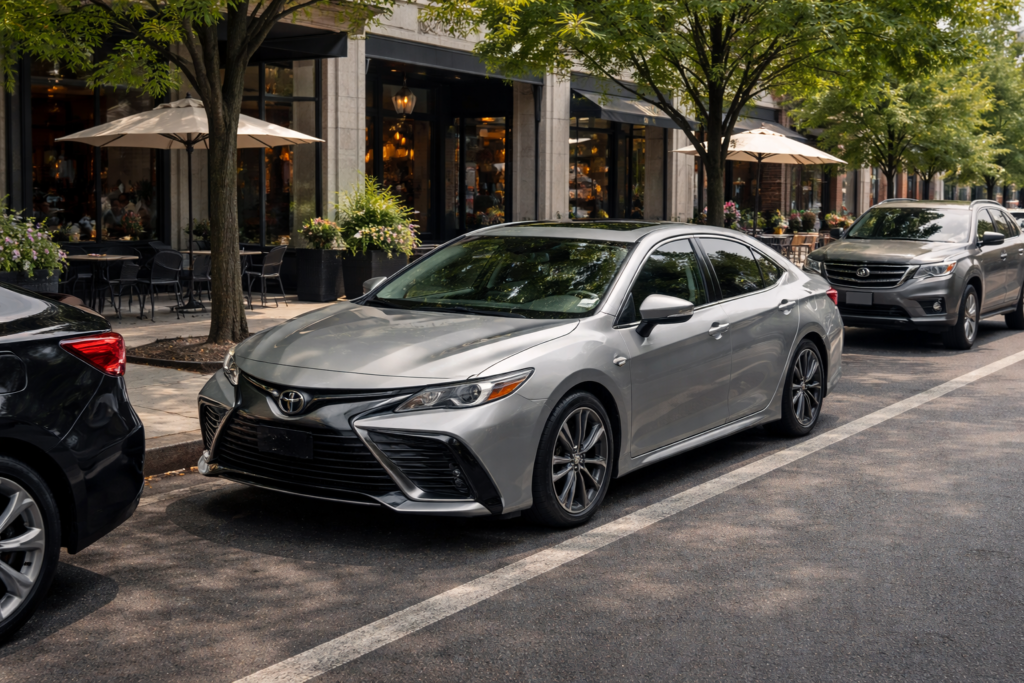
For most drivers, no.
While larger than compact sedans, the Camry balances interior comfort with daily usability:
- Manageable turning radius
- Easier parking than full-size sedans
- Strong city fuel economy in hybrid trims
Many buyers choose the Camry specifically because it offers more space than a compact car without moving into full-size territory.
Expert Insight: Why Classification Actually Matters
Vehicle size classification affects more than labels.
It can influence:
- Insurance grouping
- Fleet and rental segmentation
- Market positioning
- Competitive comparisons
Understanding that the Camry is midsize helps buyers compare it properly against rivals like midsize sedans, not compact models.
Final Verdict: Is the Toyota Camry a Compact or Midsize?
No, the Toyota Camry is not a compact car. It is classified as a midsize sedan under EPA passenger-volume standards because its total interior space exceeds the limits for compact vehicles.
The Toyota Camry is a midsize sedan, not a compact car. Its interior volume exceeds compact limits, its platform supports midsize dimensions, and every modern generation fits squarely within EPA midsize standards.
If you are comparing vehicles, evaluate the Camry against other midsize sedans, not compact options.
Knowing the correct classification prevents segment confusion and leads to better purchase decisions.
In global markets, the Camry is often described as a D-segment sedan, which aligns closely with the U.S. midsize category. However, U.S. federal size classification relies strictly on measurable interior volume rather than market naming conventions.
EPA vehicle size classes explained (MotorTrend).
FAQs:
Is the Toyota Camry a compact car?
No. The Toyota Camry is officially classified as a midsize sedan under EPA passenger-volume standards.
Is the Toyota Camry bigger than the Corolla?
Yes. The Camry is longer, wider, and offers more rear legroom and trunk space than the Corolla.
Does the 2025–2026 Camry remain a midsize car?
Yes. Despite becoming hybrid-only, its platform and interior dimensions still meet midsize classification.
How does the EPA classify compact vs midsize cars?
The EPA uses interior passenger volume: 100–109 cu ft is compact, 110–119 cu ft qualifies as midsize.
Has the Camry ever been officially classified as compact in the U.S.?
No. Every modern U.S. generation has exceeded compact thresholds and remained in the midsize segment.
Conclusion:
The Toyota Camry is definitely a midsize sedan, not a compact car. Its measured passenger and total interior volume consistently place it within midsize federal classification standards. While pricing or fuel economy may overlap with some compact models, federal size categorization is based strictly on measurable cabin space. Understanding this distinction helps buyers compare the Camry against true midsize competitors rather than smaller compact sedans, leading to more accurate purchase decisions.