What Does Tpms Mean On A Toyota Camry? (Quick Guide)
The TPMS (Tire Pressure Monitoring System) on a Toyota Camry is a safety feature that alerts drivers when tire pressure is low. This system ensures your tires are properly inflated, improving fuel efficiency, vehicle handling, and safety. From 2007 models to the 2026 Camry, all vehicles are equipped with either direct or indirect TPMS, depending on trim and year.
In this guide, we will understand what does Tpms mean on a Toyota Camry. how TPMS works, common warning light triggers, and maintenance requirements.
What Is the TPMS System in a Toyota Camry?
What Does Tpms Mean On A Toyota Camry? The TPMS system in a Camry monitors the air pressure in each tire and sends information to the car’s dashboard. Direct TPMS uses sensors inside each tire, while indirect TPMS estimates pressure using wheel speed sensors. All models from 2012 onward generally use direct TPMS for more precise readings. Early Camry models (2007 to 2011) may feature indirect TPMS, which is less accurate but still triggers warnings when tires are significantly underinflated.
Many Toyota Camry owners notice the TPMS warning light during seasonal temperature changes or after tire service. In most cases, the issue is simple to diagnose with a tire pressure check or a quick system reset.
Tire Pressure Monitoring Systems became mandatory in U.S. passenger vehicles after the Transportation Recall Enhancement Accountability and Documentation Act required manufacturers to include low-pressure warning systems for driver safety.
How Does the Camry TPMS System Work?
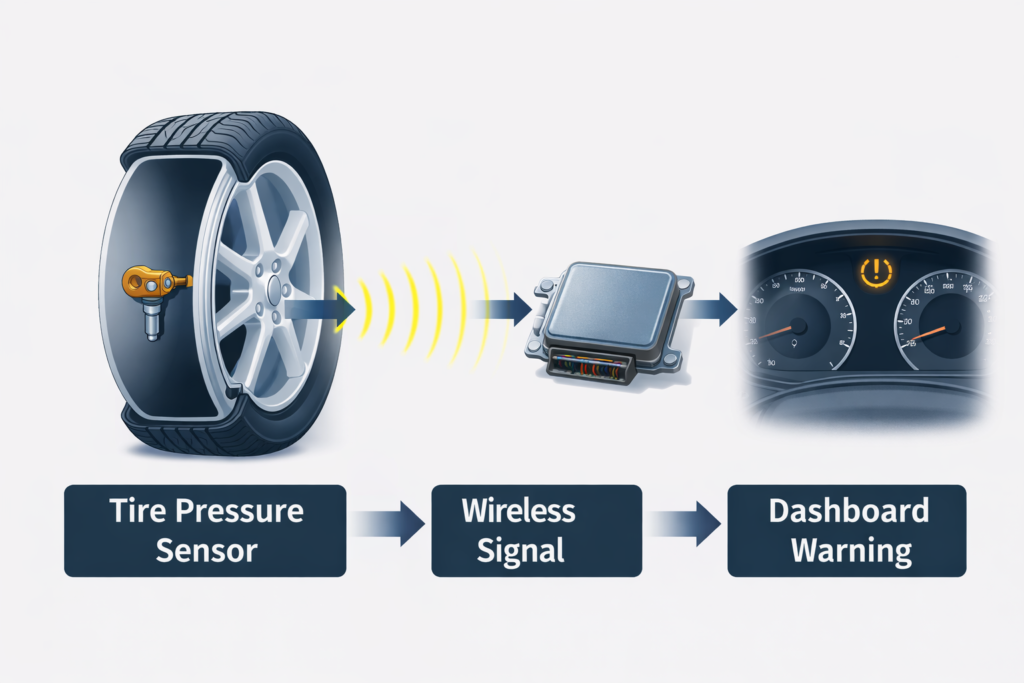
In the Camry, each tire has a sensor transmitting real-time pressure data to the vehicle’s ECU. When pressure drops below the recommended level, the dashboard warning light turns on. Direct TPMS sensors also measure temperature, helping explain false warnings in cold weather. For example, a winter morning drop of 10°F can reduce tire pressure by ~1 PSI, triggering the TPMS alert even if tires are not punctured.
What Does the TPMS Warning Light Look Like?
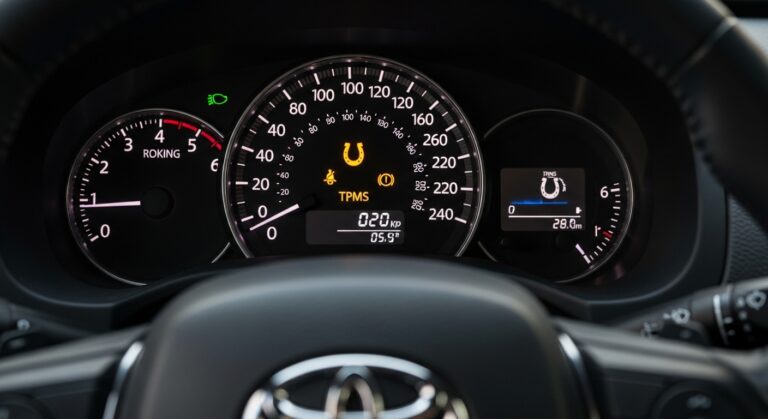
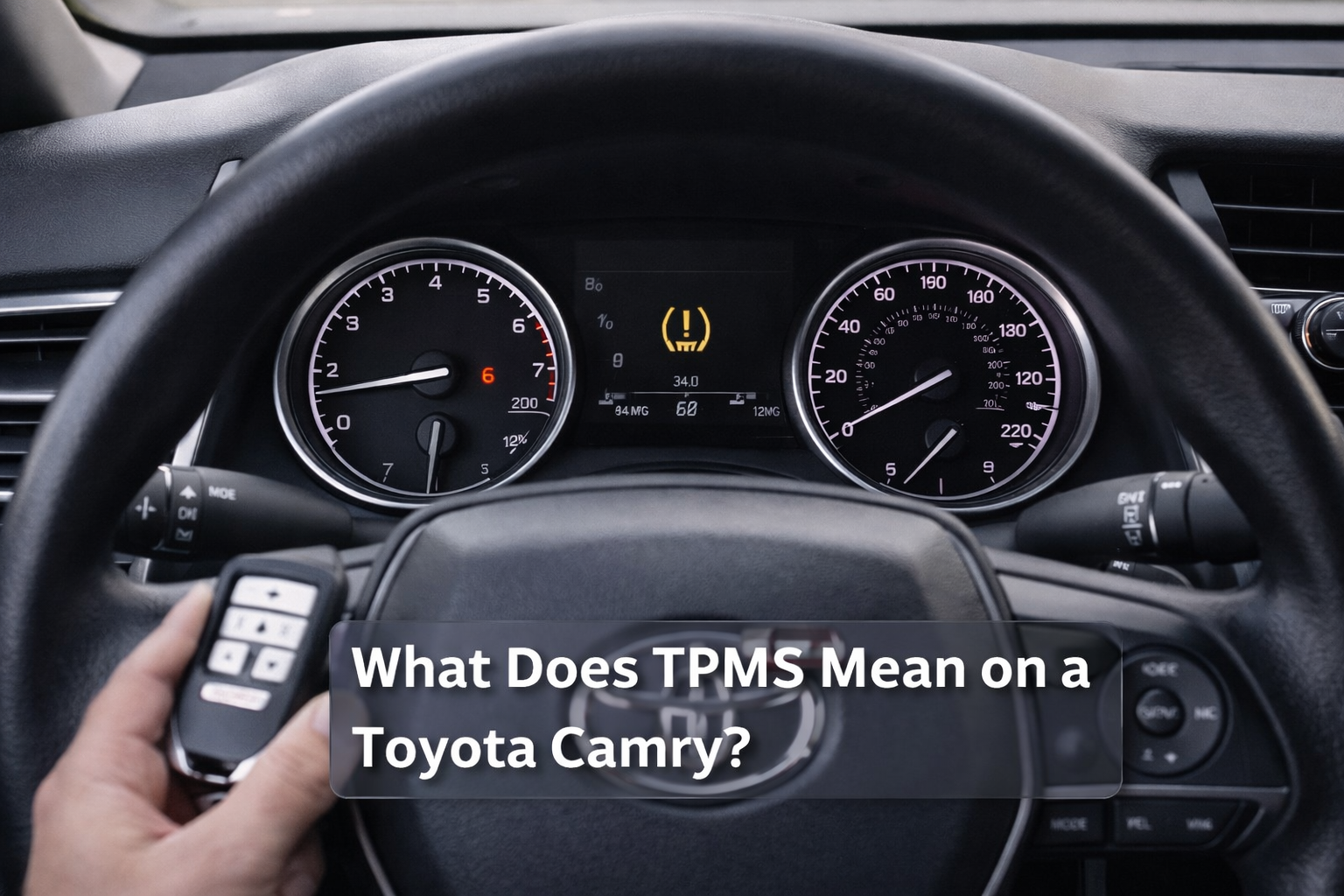
The TPMS warning light on a Camry dashboard appears as a small yellow tire icon with an exclamation mark in the center. On newer models (2018 to 2026), this light may also show the exact tire with low pressure. Older models display a generic warning.
Quick Table for Visual Reference:
| Camry Model Year | Warning Light Appearance | Notes |
| 2007 to 2011 | Yellow tire icon | Generic warning |
| 2012 to 2017 | Yellow tire icon | Flash for low pressure may show an affected tire in the display |
| 2018 to 2026 | Yellow tire icon + tire display | Shows the exact low-pressure tire |
According to the Toyota Camry Owner’s Manual (toyota.com/owners), the TPMS light appears as a yellow tire icon with an exclamation mark, turning solid when a tire falls below recommended pressure.
Toyota owner manuals confirm that the TPMS indicator appears as a yellow tire-shaped symbol with an exclamation mark when pressure drops below the recommended level.
Why Is the TPMS Light On in a Toyota Camry?
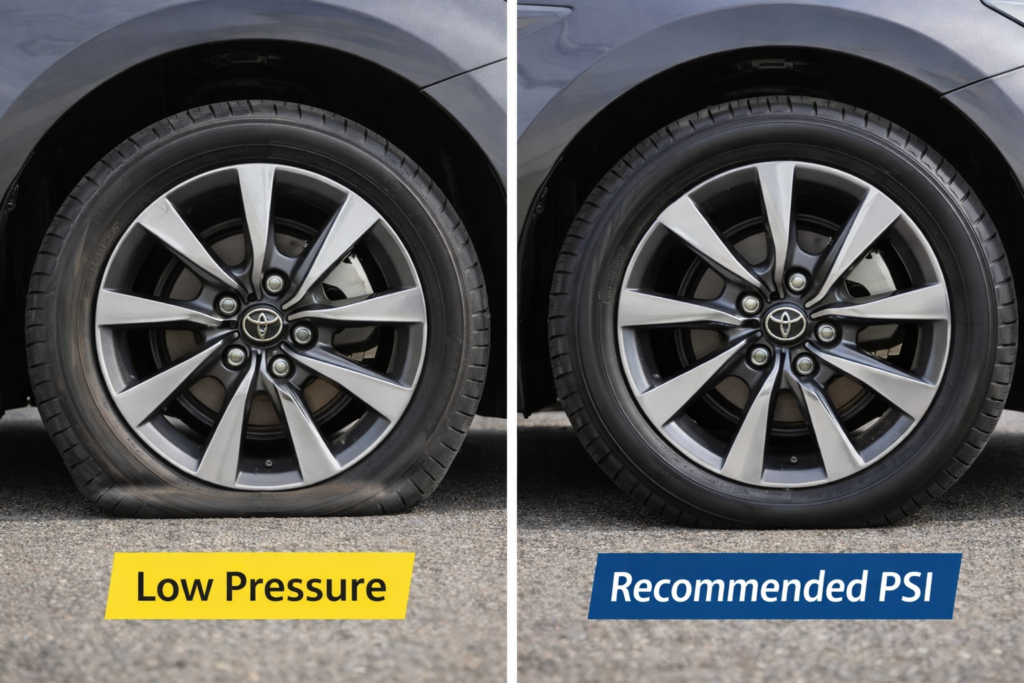
- Low tire pressure due to a slow leak or temperature drop
- Faulty TPMS sensor or dead battery
- After tire rotation or replacement without sensor reprogramming
- A system error in the ECU
In real-world driving, cold mornings often trigger the light even when the tires are fine. Always check the actual tire pressure before assuming a sensor fault.
Bridgestone notes that TPMS lights can blink due to sensor battery failure or after tire rotation (Bridgestone Tires, bridgestone.com).
Also Read: Why Is My Tire Pressure Light Blinking Toyota?
Why Does the Camry TPMS Light Blink First?
Blinking typically indicates the system is detecting a malfunction. On Camry models:
- 2007 to 2011: Blinking may indicate sensor communication loss
- 2012 to 2017: Often shows after tire rotation or battery issues
- 2018 to 2026: Blinking can indicate ECU detected a sensor fault or improper installation
Once the fault resolves or the sensor is replaced, the light usually becomes solid before turning off.
How Do You Diagnose a TPMS Problem on a Toyota Camry?
If the TPMS warning light stays on after inflating the tires, the issue may be related to a sensor, system reset, or temperature changes. A quick diagnostic check can help identify the real cause.
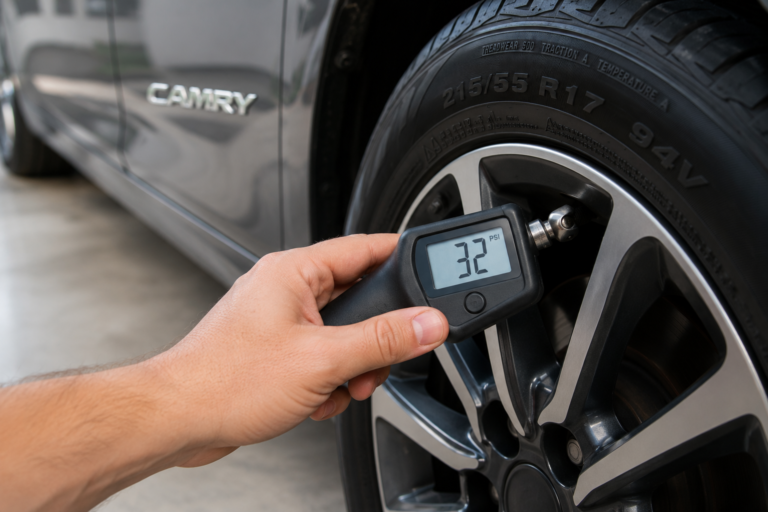
Check tire pressure using a manual gauge on all four tires.
- Inspect the tire for nails, slow leaks, or damaged valve stems.
- Restart the vehicle after inflating tires to see if the system resets.
- If the light keeps blinking, a TPMS sensor battery may be failing.
After diagnosing TPMS warnings on several Camry models, the most common cause is simply seasonal pressure change rather than a sensor failure.
What Causes the TPMS Light to Turn On?
Common causes include:
- Actual low tire pressure from a puncture or air loss
- Sensor battery failure (typical life: 5–10 years)
- Tire rotation or replacement without the relearning procedure
- Extreme weather is causing temporary pressure changes
For example, a Camry in winter may have all tires within safe range, but the TPMS still lights up due to temperature drops affecting pressure readings.
Why Does Cold Weather Trigger the Camry TPMS Light?
Cold temperatures can temporarily lower tire pressure, which may trigger the TPMS warning light. Tire pressure naturally drops when air temperature decreases. A drop of about 10°F can reduce pressure by roughly 1 PSI, which is often enough for the system to detect under-inflation.
- Winter temperature drop reduces tire pressure
- Tires inflated when warm may lose pressure overnight
- Inflating tires to the recommended PSI usually resolves the issue
Many Camry owners panic when the TPMS light appears during winter, but in most cases, the issue disappears after inflating the tires
Can You Drive With the TPMS Light On?
Short-term driving with the TPMS light on is generally safe if tires aren’t severely underinflated.
- Check each tire manually with a gauge
- Inflate tires to the recommended PSI (see below)
- Avoid high speeds or long trips until proper inflation is restored
Long-term driving with low pressure can cause poor handling, uneven tire wear, and reduced fuel efficiency.
What Tire Pressure Should a Toyota Camry Have?
Recommended tire pressures vary slightly by model year and trim:
| Camry Year | Front PSI | Rear PSI | Notes |
| 2007 to 2011 | 32 | 32 | Standard trims |
| 2012 to 2017 | 33 | 33 | Includes hybrid models |
| 2018 to 2026 | 33–35 | 33–35 | Check the driver’s door placard for the exact value |
Tip: Always check pressure when tires are cold, preferably in the morning.
Where Is the TPMS Sensor Located in a Camry?
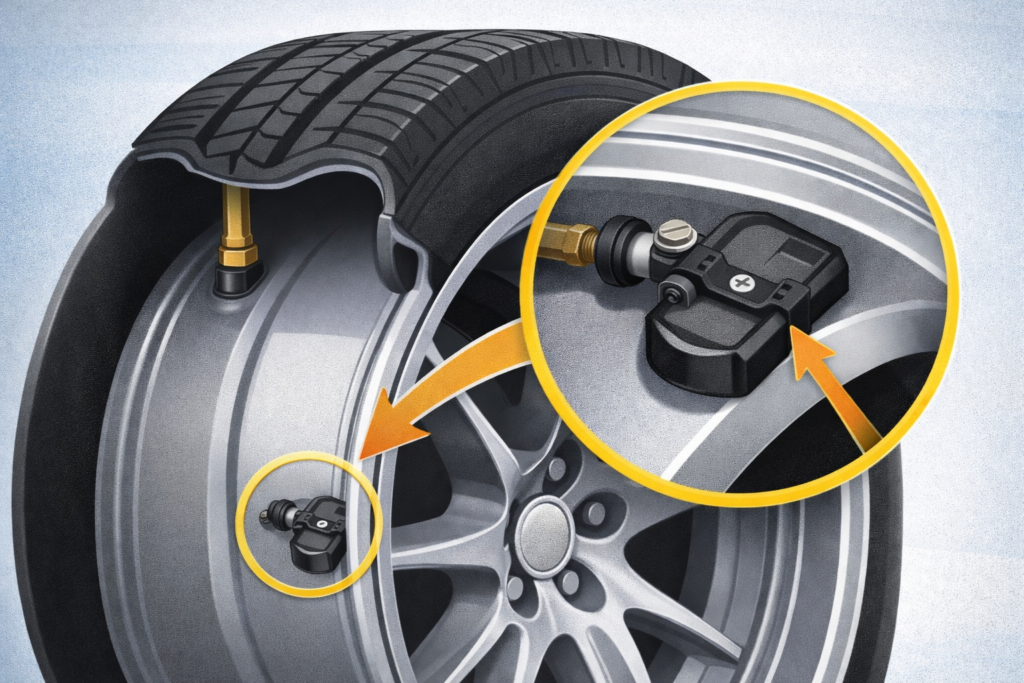
- Inside the tire, attached to the valve stem
- Direct TPMS sensors transmit data wirelessly to the ECU
- Older indirect TPMS models measure wheel speed instead
This placement ensures accurate tire pressure readings without affecting driving performance.
How Long Do Camry TPMS Sensors Last?
- Typical lifespan: 5–10 years
- The battery is sealed; sensor replacement is needed once it dies
- Driving habits, climate, and tire rotation frequency can affect longevity
Older Camrys (2007 to 2011) may see earlier sensor issues due to indirect TPMS reliance on ABS wheel sensors, which wear over time.
Most TPMS sensors last between five and ten years because they rely on sealed lithium batteries that cannot be replaced individually.
How Much Does a Camry TPMS Sensor Cost?
Average replacement costs (2026 rates):
| Component | Cost Range (USD) |
| Sensor | $40 to $120 |
| Labor/Programming | $50 to $100 |
| Total per tire | $90 to $200 |
High trim models or hybrid Camrys may cost slightly more due to advanced sensor modules.
How Do You Reset the TPMS Light on a Camry?
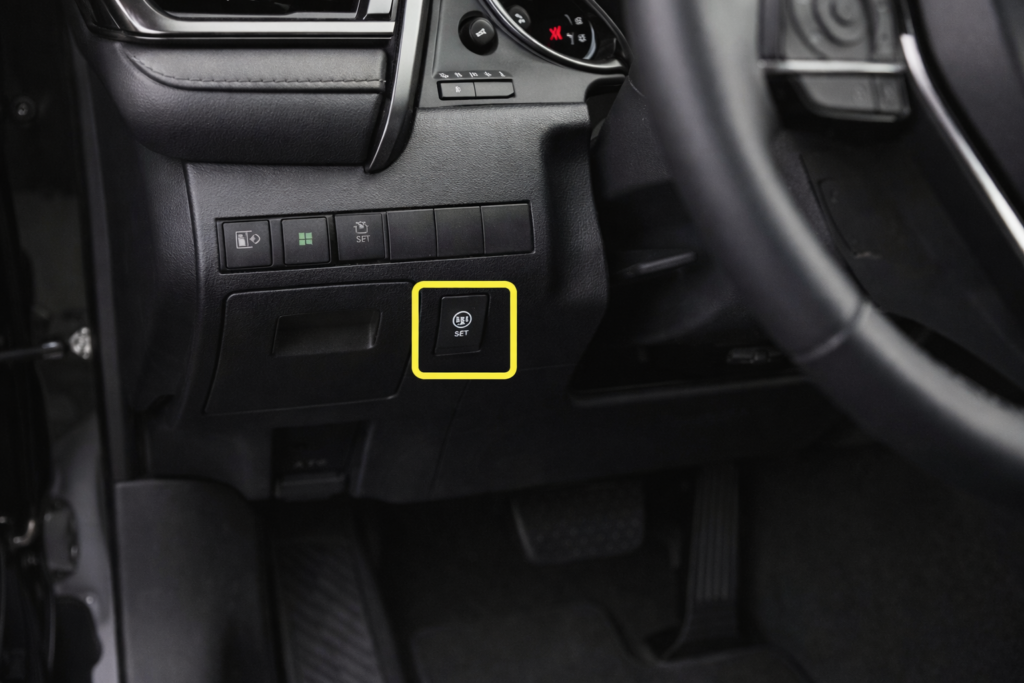
Ensure tires are inflated to the recommended PSI
For 2007 to 2011: Turn ignition to ON, hold TPMS reset button until light blinks, then drive to complete reset
For 2012 to 2026: Many models auto-relearn after driving at 50–60 mph for 10–15 minutes
If the reset fails, check the sensor battery or recalibration needs.
Read Guide: How to Reset Maintenance Light on Toyota Camry?
Where Is the TPMS Reset Button on a Toyota Camry?
On most Toyota Camry models, the TPMS reset button is located under the dashboard near the steering column. Some newer models place it inside the glove box or integrate the reset function into the infotainment settings.
Quick list:
- 2007 to 2011: Reset button under the steering wheel
- 2012 to 2017: Button near the dashboard or steering column
- 2018 to 2026: Reset through the vehicle settings menu
Does Tire Rotation Affect TPMS?
Yes. After rotating tires, sensors may need relearning to match new positions:
- Direct TPMS: Use the reset button or follow the driving relearn procedure
- Indirect TPMS: System may auto-adjust, but the initial warning light can appear until calibration completes
Do TPMS Sensors Need Reprogramming?
New or replaced sensors must be registered to the vehicle’s ECU
Some Toyota Camry models auto-relearn; others require a manual reset
Failure to program leads to a persistent warning light even with the correct tire pressure.
FAQs:
Can I drive with the TPMS light on?
Yes, you can drive short distances, but check tire pressure first to avoid unsafe handling or tire damage.
Does TPMS need battery replacement?
Yes, TPMS sensors have batteries that last 5–10 years and require replacement when they die.
Will rotating tires trigger the TPMS light?
Informative: Rotating tires may trigger the light; most Camrys need a reset or auto-relearn after rotation.
Does cold weather affect TPMS?
Informative: Temperature drops can reduce tire pressure slightly, causing the TPMS light to turn on even if the tires are fine.
Can TPMS sensors fail without reason?
No, TPMS sensors only fail due to battery depletion, physical damage, or improper programming, not spontaneously.
Conclusion:
Understanding the TPMS system on a Toyota Camry helps prevent low tire pressure issues and ensures safe driving. Regularly checking tire pressure, performing proper resets, and replacing aging sensors keep the system reliable. With proper care, TPMS enhances safety, fuel efficiency, and tire longevity across all Camry models from 2007 to 2026.