Toyota Camry Oil Consumption Fix? Causes, Diagnosis & Solutions
Toyota Camry oil consumption is a known issue in some older engines, especially models built before the early 2010s. The problem is usually linked to piston ring design, carbon buildup, or normal engine wear. However, not every Camry experiences this issue, and newer engines rarely show the same problem.
This guide explains Toyota Camry oil consumption Fix, how to confirm the issue, and which fixes actually work for models from older generations up to newer versions.
Which Toyota Camry Years Have Oil Consumption Problems?
Oil consumption complaints mostly appear in certain Camry engines produced in the late 2000s. Toyota later improved piston design, which reduced the issue in newer models.
| Engine | Model Years | Oil Consumption Risk |
| 2AZ-FE 2.4L | 2007 to 2011 | Higher risk |
| 2AR-FE 2.5L | 2012 to 2017 | Much lower risk |
| Dynamic Force 2.5L | 2018 to 2026 | Rare |
Most drivers with 2018 or newer Camry models report little or no abnormal oil consumption.
Why Is My Toyota Camry Burning Oil?
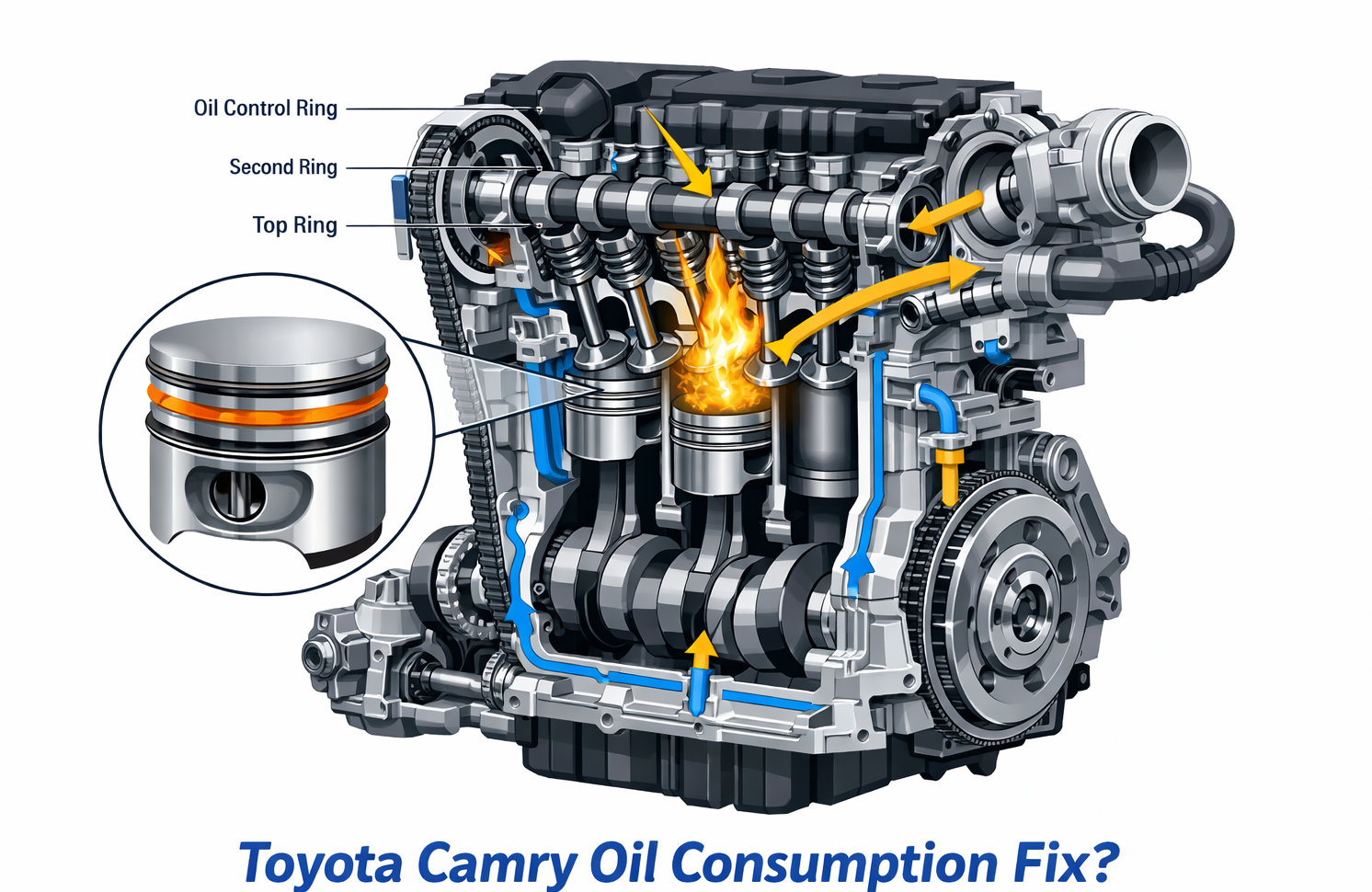
Most Camry engines that burn oil do so because oil enters the combustion chamber and burns with fuel. This usually happens when piston rings wear out, valve seals leak, or the PCV system stops working properly.
Older engines, especially the 2.4-liter four-cylinder used in late-2000s Camrys, were more prone to this issue. Carbon buildup around piston rings could prevent them from scraping oil off the cylinder wall, allowing oil to slip into the engine and burn.
Common reasons a Camry burns oil
- Worn or stuck piston rings allow oil into the cylinders
- A clogged PCV valve increases crankcase pressure
- Valve stem seals are leaking oil into the combustion chamber
- Poor maintenance is causing carbon buildup inside the engine
Sometimes a simple maintenance step works. In other cases, the repair may involve piston rings or deeper engine work. Understanding the cause first will help you choose the right fix.
How Much Oil Consumption Is Normal for a Camry?
Some oil usage is normal for any gasoline engine. Even a healthy engine can burn a small amount between oil changes. What matters is how fast the oil level drops.
Toyota generally considers moderate oil use acceptable if it stays within a certain range. However, if the oil level drops too quickly, it usually signals a mechanical problem.
| Oil Usage Rate | What It Usually Means |
| Less than 1 quart per 3,000 to 5,000 miles | Normal engine behavior |
| About 1 quart per 1,500 to 2,000 miles | Higher than normal but manageable |
| 1 quart per 1,000 miles or less | Likely engine wear or piston ring issue |
If you constantly need to add oil before each service interval, the engine should be inspected.
Not sure which fuel keeps your Camry running smoothly and avoids extra engine wear? Check this guide to know exactly what gas your Camry needs.
Does the 2AZ-FE Engine Cause Oil Consumption Problems?
Yes, the 2AZ-FE engine used in many Camry models from the mid-2000s to early-2010s is widely known for oil consumption complaints. The problem mainly came from the piston ring design used during that period.
Toyota later updated the pistons and oil control rings to reduce carbon buildup. Engines built after these updates rarely show the same level of oil burning.
| Engine | Model Years Commonly Affected | Oil Consumption Risk |
| 2AZ-FE 2.4L | 2007 to 2011 Camry | Higher risk |
| 2AR-FE 2.5L | 2012 to 2017 Camry | Much lower risk |
| Dynamic Force 2.5L | 2018 to 2026 Camry | Rarely reported |
Drivers with 2018 or newer Camry models rarely report chronic oil consumption issues.
What Causes Oil Consumption in a Toyota Camry?
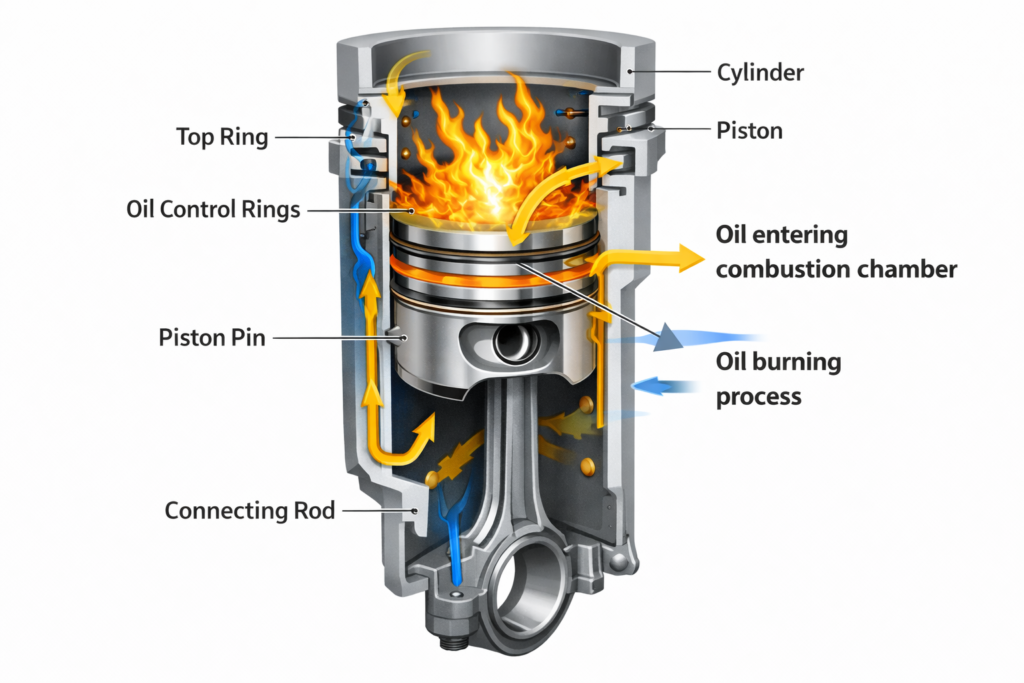
Oil consumption happens when engine oil enters the combustion chamber and burns with the fuel mixture. This usually points to internal engine wear or a ventilation issue.
The most common cause in Camrys is piston ring failure. When oil control rings stick due to carbon buildup, they stop scraping excess oil from the cylinder walls.
Key causes of Camry oil consumption
- Stuck oil control rings caused by carbon buildup
- Worn piston rings after high mileage
- PCV valve blockage increases pressure in the crankcase
- Valve stem seal wear in older engines
Regular oil changes can slow these issues, but once piston rings wear out, mechanical repair is often required.
What Are the Symptoms of Camry Oil Consumption?
Drivers usually notice oil consumption gradually. The engine may run normally at first, but small warning signs begin to appear over time.
Common symptoms include:
- Blue smoke from the exhaust during acceleration
- The oil level is dropping between oil changes
- Burning oil smell from the engine
- Fouled or oily spark plugs
If these symptoms appear together, the engine is likely burning oil internally.
Owner discussions and experiences on the Toyota Nation forum.
How Can I Confirm Oil Consumption in My Camry?
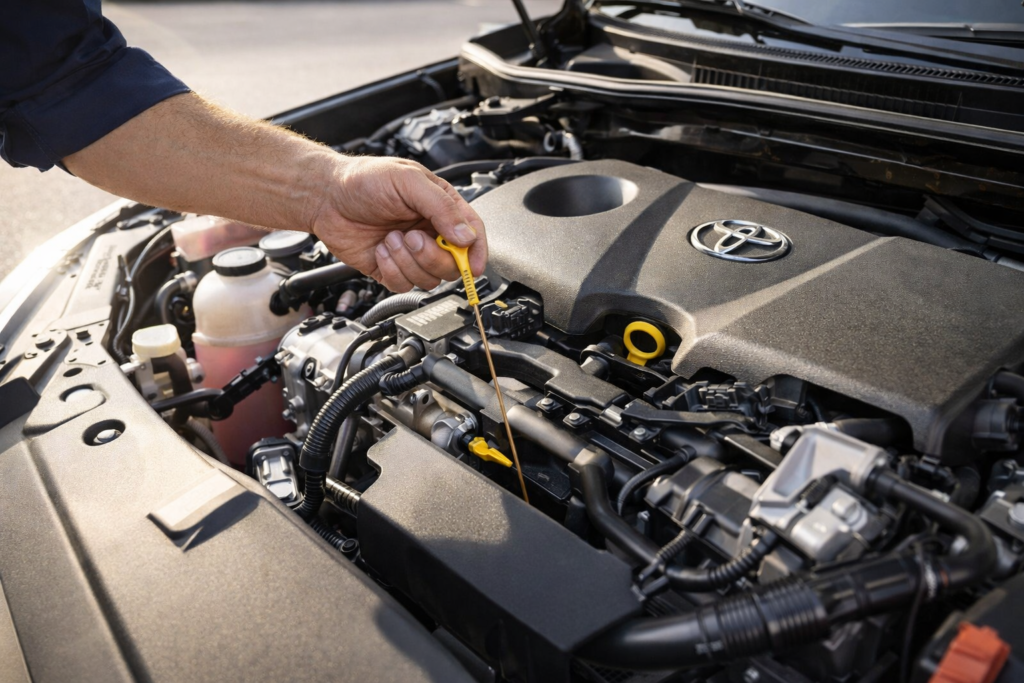
The easiest way to confirm oil consumption is by tracking your oil level between oil changes. Many owners first notice the issue when the dipstick reads low after only a few thousand miles.
To verify the problem, check the oil level regularly and note how quickly it drops. A sudden drop usually indicates the engine is burning or leaking oil.
Simple way to monitor oil use
- Check the dipstick every 500 to 1,000 miles
- Record the oil level each time
- Add oil if needed, and track how much was added
- Compare usage over several weeks of driving
If the engine consistently loses large amounts of oil without visible leaks, it is likely burning oil internally.
How Do You Perform a Camry Oil Consumption Test?
A proper oil consumption test measures how much oil the engine uses over a set distance. This is often how dealerships confirm the issue.
The process is simple but requires accurate measurement.
Basic oil consumption test steps
- Start with a fresh oil change and a full oil level
- Seal the dipstick or mark the oil level carefully
- Drive the car normally for about 1,000 miles
- Measure how much oil was lost during that distance
If the engine uses close to a quart within that range, it may indicate excessive oil consumption.
How Do You Fix Toyota Camry Oil Consumption?
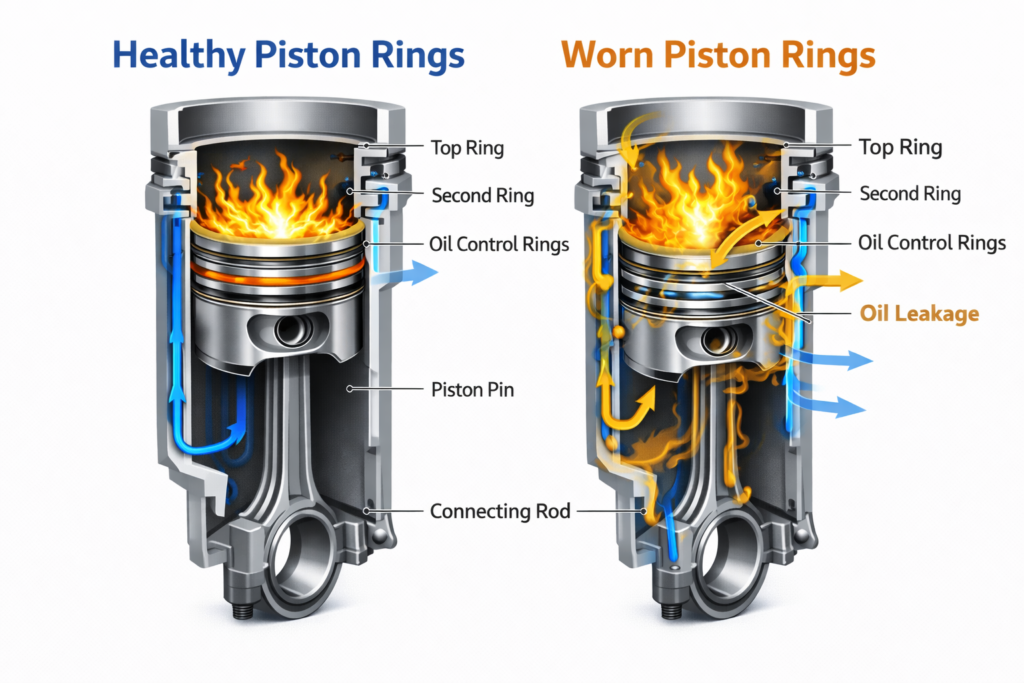
The fix depends on what is causing the oil to burn. Sometimes cleaning carbon buildup or replacing small components solves the issue. In other cases, the repair requires replacing piston rings or rebuilding the engine.
A good diagnosis is important because replacing expensive parts without confirming the cause can waste money.
| Fix Method | Best For | Difficulty |
| PCV valve replacement | Minor oil burning | Easy |
| Engine cleaning treatment | Carbon buildup | Moderate |
| Piston soak procedure | Stuck rings | Moderate |
| Piston ring replacement | Severe oil consumption | Major repair |
Many owners start with simple fixes before moving to mechanical repairs. Professional mechanics usually diagnose oil consumption using compression and leak-down tests, as well as oil monitoring procedures.
Can Thicker Oil Reduce Camry Oil Burning?
Yes, thicker oil can sometimes reduce oil burning, especially in older engines with wear. A slightly higher viscosity helps the oil stay on engine parts rather than slipping past worn piston rings.
However, thicker oil does not fix the root cause. It only slows the rate at which oil is burned.
Situations where thicker oil may help
- High-mileage engines with worn internal parts
- Engines that burn oil slowly but consistently
- Older Camrys with minor piston ring wear
Drivers often switch from 0W-20 to 5W-30 in high-mileage engines, but the owner’s manual recommendations should still be considered.
However, mechanics usually treat thicker oil as a temporary solution. If the engine continues burning oil, a proper mechanical repair may still be needed.
Do Oil Additives Help Fix Camry Oil Consumption?
Oil additives can sometimes reduce oil burning by cleaning carbon deposits or improving oil sealing around worn components. Products designed for high-mileage engines often contain seal conditioners and detergents.
However, additives are not a permanent fix. They work best when oil consumption is caused by minor buildup rather than mechanical damage.
Many mechanics recommend trying additives only after confirming there are no serious engine failures.
Can a Piston Soak Fix Camry Oil Burning?
A piston soak is a cleaning method used to free stuck piston rings. It involves placing a cleaning solution in the cylinders to dissolve carbon buildup around the rings.
This method has helped some Camry owners reduce oil consumption, especially on engines where carbon buildup is the main problem.
What a piston soak usually does
- Breaks down carbon deposits around piston rings
- Helps oil control rings move freely again
- Reduces oil slipping into the combustion chamber
Results vary depending on engine wear. If piston rings are physically worn, soaking will not fully resolve the issue.
When Should Camry Piston Rings Be Replaced?
Piston ring replacement becomes necessary when oil consumption is severe, and other fixes no longer work. This repair usually involves removing the engine cylinder head and pistons.
It is a major repair, so most owners consider it only after confirming the engine is burning oil at a high rate.
| Symptom | What It Suggests |
| Blue smoke from the exhaust | Oil burning in cylinders |
| Oil loss every 500–1000 miles | Severe ring wear |
| Fouled spark plugs | Oil entering the combustion chamber |
At this stage, replacing piston rings or rebuilding the engine is often the permanent solution.
How Much Does It Cost to Fix Camry Oil Consumption?
Repair costs depend on the severity of the problem. Minor fixes can be inexpensive, but major engine repairs can become costly.
| Repair Type | Typical Cost |
| PCV valve replacement | $50 to $150 |
| Engine cleaning treatment | $100 to $250 |
| Piston soak procedure | $200 to $400 |
| Piston ring replacement | $3000 to $5000 |
Many owners start with simple fixes before considering major engine repairs.
Is Rebuilding a Camry Engine Worth It?
For many owners, rebuilding the engine makes sense only if the car is otherwise in good condition. Camrys are known for durability, so a properly rebuilt engine can last many more years.
However, the decision often depends on repair cost and vehicle value.
| Situation | Better Option |
| Car in excellent condition | Engine rebuild may be worthwhile |
| Very high mileage vehicle | A replacement engine might be cheaper |
| Minor oil consumption | Continue driving and monitor oil |
Many drivers simply monitor the oil level and keep driving if the consumption rate remains manageable.
Is It Safe to Drive a Camry That Burns Oil?
Yes, a Camry that burns oil can still be driven safely if the oil level is monitored carefully. Many drivers continue using their vehicles for years while managing oil consumption.
The biggest risk comes from letting the oil level drop too low.
Safety tips if your Camry burns oil
- Check oil level frequently
- Keep spare engine oil in the car
- Never let the oil level fall below the safe range
Ignoring the oil level can eventually cause engine damage, so regular monitoring is essential for long-term reliability.
How Can You Prevent Camry Oil Consumption?
Good maintenance habits can help Toyota Camry Oil Consumption Fix over time.
Simple preventive steps include:
- Change engine oil at the recommended interval
- Use the correct oil viscosity for your engine
- Check the oil level regularly
- Avoid long oil change intervals
Regular maintenance keeps piston rings cleaner and helps the engine last longer.
Did you know a clogged air filter can secretly make your Camry burn more oil? Here is the full guide on when to replace it.
FAQs:
Is oil consumption common in older Toyota Camry engines?
Yes. Some older Camry engines, especially high-mileage ones, are known to burn small amounts of oil due to piston ring wear.
Can thicker engine oil reduce Camry oil burning?
Yes. Slightly thicker oil can slow oil burning in worn engines by improving sealing around piston rings.
What is the most common cause of Camry oil consumption?
The most common cause is stuck or worn oil control rings that allow oil to enter the combustion chamber and burn with fuel.
How often should I check the oil if my Camry burns oil?
Check the dipstick every 500 to 1000 miles to monitor oil level and prevent the engine from running low.
Will oil additives permanently fix Camry oil consumption?
No. Additives may reduce minor oil burning, but cannot permanently fix worn piston rings or internal engine wear.
Conclusion:
Oil consumption in a Toyota Camry can range from a minor inconvenience to a sign of deeper engine wear. Older engines, particularly those with high mileage, are more likely to experience the issue. The key is identifying the cause early and choosing the right fix. In many cases, simple steps like monitoring oil levels, using proper oil viscosity, or cleaning carbon buildup can help. For severe cases, mechanical repair may be necessary. With proper maintenance and regular checks, many Camry owners continue driving reliably even when mild oil consumption is present.