How Many Quarts Of Oil Does A Toyota Camry Need? (Oil Capacity Guide)
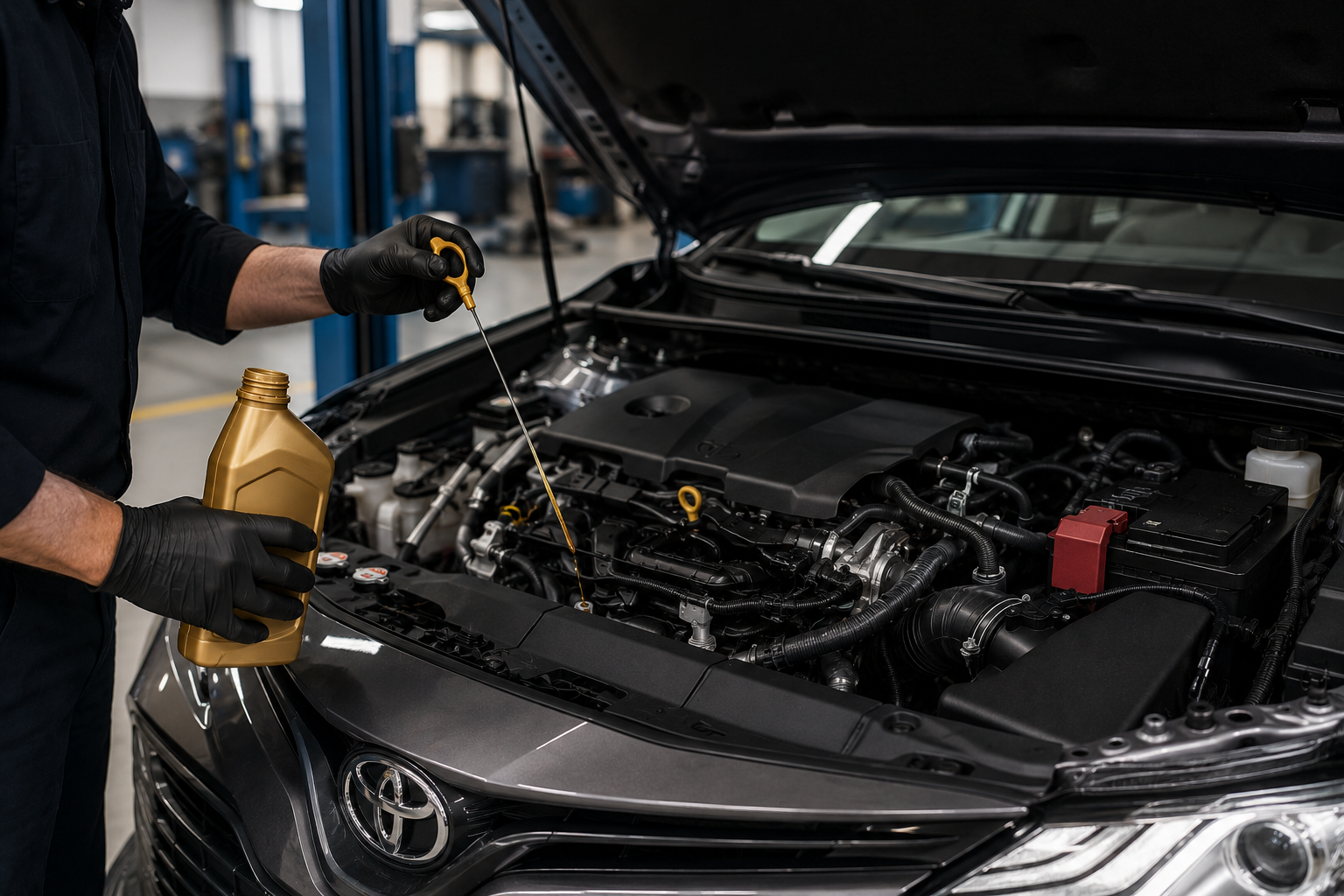
A Toyota Camry usually needs between 4.5 and 6 quarts of oil, depending on the engine size and model year. Smaller 4-cylinder engines use less oil, while V6 engines need more. Newer 2018 to 2026 Camry models also have slightly different oil capacities because of updated engine designs and oil filter sizes.
In this guide, you will learn the correct Toyota Camry oil capacity for older and newer models, common oil change mistakes, and how much oil different engines actually need.
Toyota Camry Oil Capacity Guide (2000 to 2026)
Oil capacity changes depending on engine type, not just model year. That is where many owners get confused during oil changes.
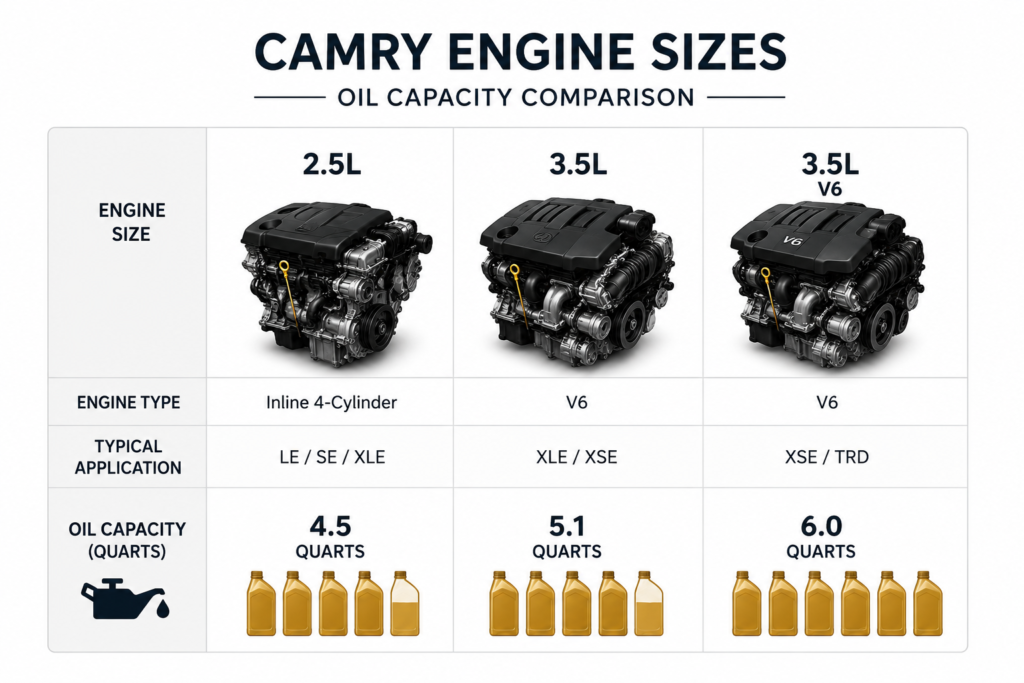
| Camry Engine | Approx Oil Capacity |
| 2.2L 4-Cylinder | 4.5 quarts |
| 2.4L 4-Cylinder | 4.5 quarts |
| 2.5L Dynamic Force Engine | 4.8 to 5 quarts |
| 3.0L V6 | 5 quarts |
| 3.5L V6 | 6 quarts |
A lot of mechanics notice owners accidentally overfill newer Camry engines because they pour a full 5-quart jug without checking the dipstick afterward.
How Much Oil Does a Camry Really Need?
Oil capacity means the total amount of engine oil needed during a full oil change with a new oil filter installed. Without replacing the filter, the amount can be slightly lower.
A lot of people still assume every Camry takes a full 5-quart bottle, but that is not always true. That surprises many first-time DIY owners.
In high-mileage Camrys, technicians sometimes notice a rough engine sound after overfilling by even half a quart. That issue becomes more common in cars that already have worn seals or delayed oil changes.
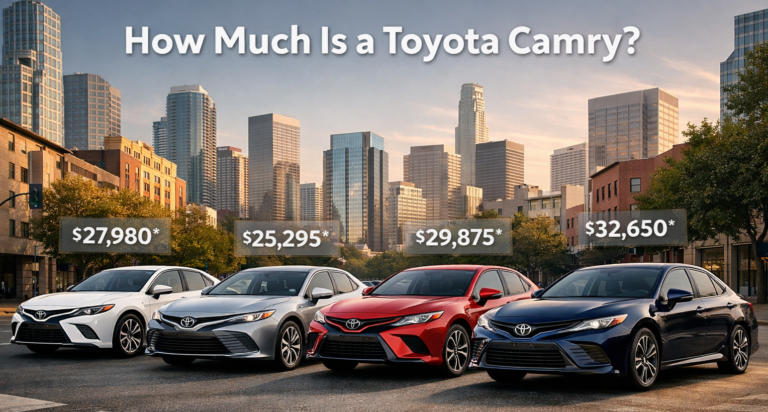
Also Read: How Much Is a Toyota Camry?
Oil Amount Differences Between Camry Engines
Different engines use different oil amounts because internal engine size and oil passage design have changed over the years.
| Engine Type | Model Years | Oil Capacity |
| 2.2L I4 | 2000 to 2001 | 4.5 quarts |
| 2.4L I4 | 2002 to 2009 | 4.5 quarts |
| 2.5L I4 | 2010 to 2017 | 4.6 quarts |
| 2.5L Dynamic Force | 2018 to 2026 | 4.8–5 quarts |
| 3.5L V6 | 2007 to 2024 | 6 quarts |
In workshops, technicians often double-check the oil level after warming up newer 2.5L engines because oil settles differently after shutdown. That small detail gets missed pretty often.
Toyota Camry Oil Capacity: Avoid This Mistake
The biggest mistake is overfilling the engine. Too much oil can create pressure problems, foaming, and rough engine behavior over time.
Another common problem is checking the oil immediately after turning the engine off. Quick oil shops sometimes rush this step, which is why small overfill mistakes happen more often than people realize. Most mechanics wait several minutes before checking the dipstick because oil needs time to settle properly.
5 Toyota Camry Oil Facts Most Owners Miss
A lot of drivers only focus on oil type and forget these small details.
- Oil filters slightly change the refill amount
- Overfilling can create rough idle problems
- Newer 2.5L engines are more sensitive to oil level
- Hybrid Camrys still need regular oil changes
- Oil settles slowly after shutdown on newer models
Drivers in hotter climates also check oil levels more often during summer because long traffic hours and heat can thin oil faster over time.
Toyota Camry Oil Change Guide With Capacity Chart
During a normal oil change, most mechanics replace both the oil and the filter. That gives the most accurate refill amount.
A lot of quick oil shops still rely on old refill estimates instead of checking the dipstick carefully. That creates small overfill problems more often than drivers realize, especially on newer 2.5L engines.
How Much Oil Goes in a Toyota Camry Engine?
Most engines take slightly less than a full large oil container. Smaller engines usually stay around 4.5 to 5 quarts, while V6 models go closer to 6 quarts.
Newer Camry engines react more noticeably to overfilling than older models did. Even half a quart extra can sometimes trigger rough idle or oil consumption complaints.
Some older Camrys with higher mileage may also consume small amounts of oil between changes. That is why experienced owners check the dipstick regularly instead of waiting for the next service interval. Some drivers even keep a small oil bottle in the trunk once the car passes a higher mileage.
Toyota Camry Oil Capacity for Every Engine Model
Older Camry engines from the early 2000s used simpler oil systems and smaller capacities. Newer Dynamic Force engines from 2018 onward improved cooling and efficiency, which slightly changed oil needs.
Drivers moving from older Camrys to newer models often notice the dipstick markings look different, too. That change confuses many DIY owners during their first oil service.
Read Guide: What Engine Does a Toyota Camry Have?
The Right Way to Fill the Camry Engine Oil
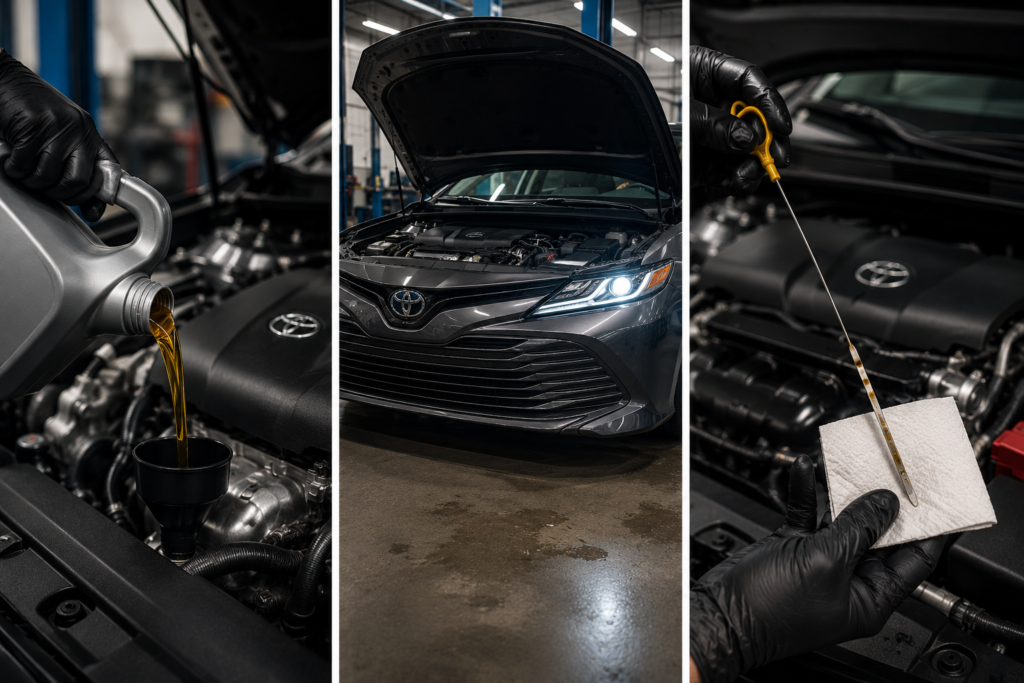
The easiest way to avoid mistakes is simple:
- Add slightly less than full capacity first
- Run the engine briefly
- Wait a few minutes
- Check the dipstick carefully
- Add more only if needed
That small habit prevents many overfill problems mechanics regularly see in quick oil change shops.
FAQs
Does a Toyota Camry need exactly 5 quarts of oil?
Yes, many newer 4-cylinder Camry models stay close to 5 quarts, but exact capacity still depends on the engine and filter size.
Can too much oil hurt a Toyota Camry engine?
Yes. Too much oil can create pressure problems, a rough idle, and oil foaming inside the engine over time.
Is the Toyota Camry oil capacity different for V6 models?
V6 Camry engines usually need around 6 quarts because the engine is larger and holds more oil internally.
Why does oil look low right after changing it?
Oil sometimes takes a few minutes to settle fully after shutdown, especially on newer 2.5L engines.
Do hybrid Toyota Camry models use less engine oil?
No. Hybrid Camrys still use regular gasoline engines, so oil capacity stays similar to standard 4-cylinder models.
Conclusion
Toyota Camry engines usually last a long time when the oil level stays correct. The problem is that many drivers either overfill slightly or forget to recheck the dipstick after driving. Mechanics see this pretty often on newer models. Using the right amount matters more than most people think, especially on newer 2.5L engines. With regular oil changes and proper level checks, these cars regularly handle very high mileage without major engine trouble.