How Does the Toyota Camry Hybrid Really Work? (Hybrid Explained)
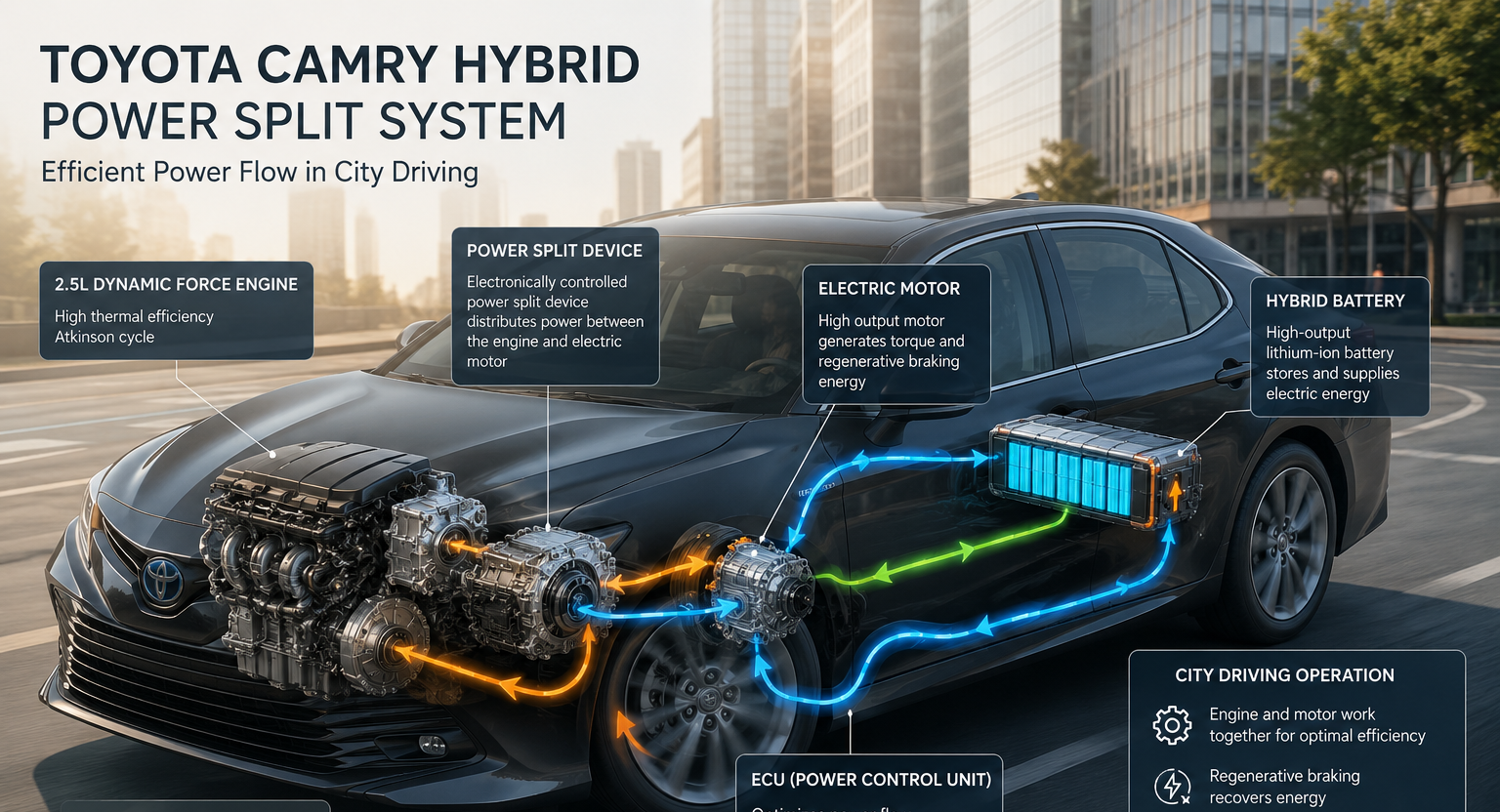
The Toyota Camry Hybrid works by combining a gasoline engine with electric motors and a hybrid battery. It switches between electric power, engine power, or both together to improve fuel economy, reduce fuel waste, and deliver smoother everyday driving performance.
In this guide, you will learn how the Toyota hybrid system works, how power changes during driving, and what makes newer 2026 models more efficient than older generations.
Toyota Camry Hybrid Explained in Simple Terms
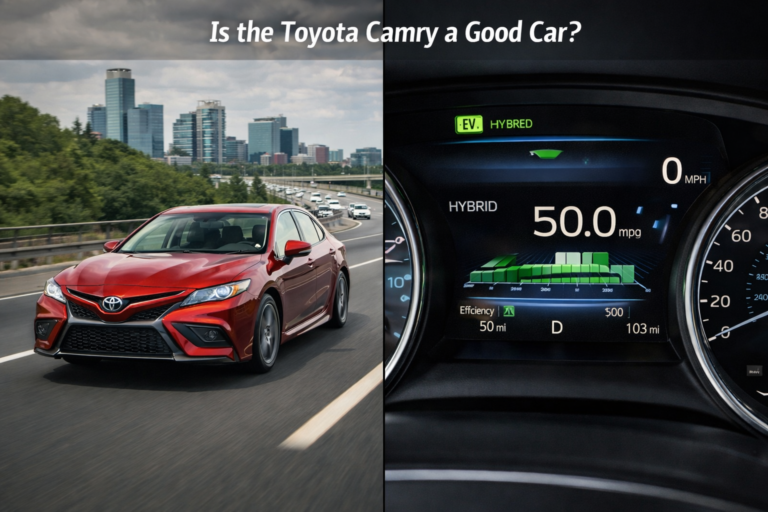
The Toyota Camry Hybrid uses both a gasoline engine and an electric motor to move the car. At low speeds, the electric motor can power the car alone. During harder acceleration or highway driving, the gasoline engine joins in.
Most drivers do not notice this at first. The change happens quietly while driving, and after some time, it just feels normal on the road.
Unlike older hybrid systems from the late 2000s, newer 2020 to 2026 Camry hybrids manage battery charging more smoothly. That difference becomes more noticeable in hot cities and heavy traffic.
How Does the Toyota Camry Hybrid Work in Real Driving?
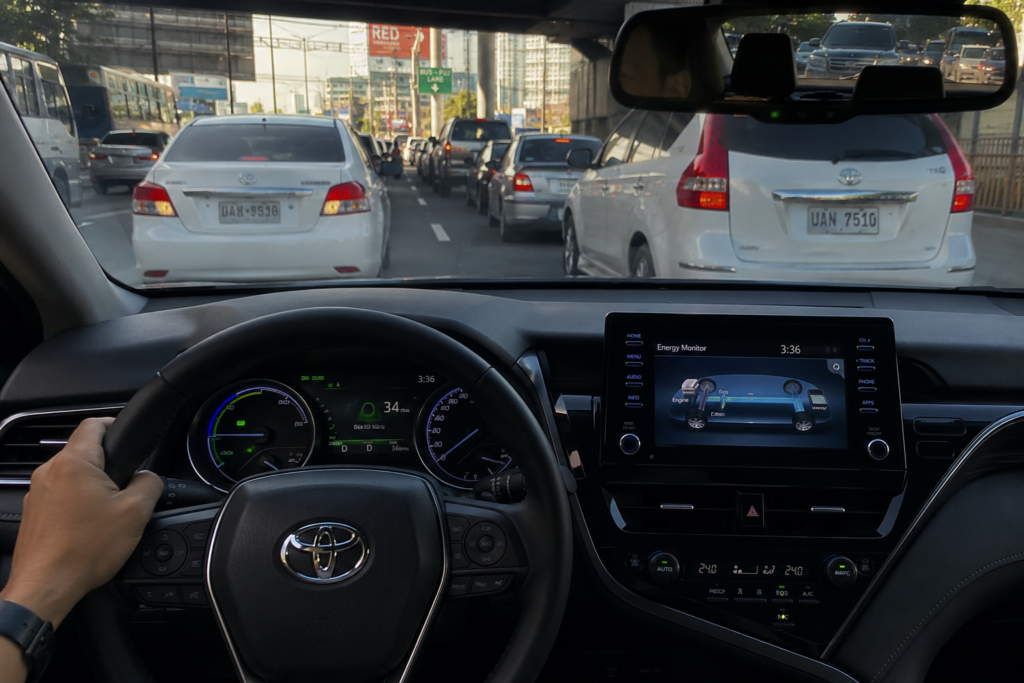
The car responds differently depending on traffic, speed, and acceleration. In slow city traffic, electric power takes more load. On highways, the gasoline engine stays active longer because a steady speed needs constant energy.
A lot of first-time hybrid owners notice this pretty quickly. After a few weeks, the switching between power sources becomes almost unnoticeable.
Real-World Hybrid Behavior
| Driving Situation | What Happens |
| Slow traffic | Uses more electric power |
| Hard acceleration | The engine and motor work together |
| Highway cruising | The engine stays active longer |
| Braking | Recharges the battery |
That smooth transition is one reason Camry hybrids became popular with taxi and rideshare drivers over the years. In real use, mechanics often say most hybrid complaints do not come from the system itself but from heat buildup and poor maintenance. In taxi fleets, this behavior becomes more noticeable after high mileage. Most drivers only realize it after months of city driving.
7 Things That Make the Camry Hybrid So Efficient
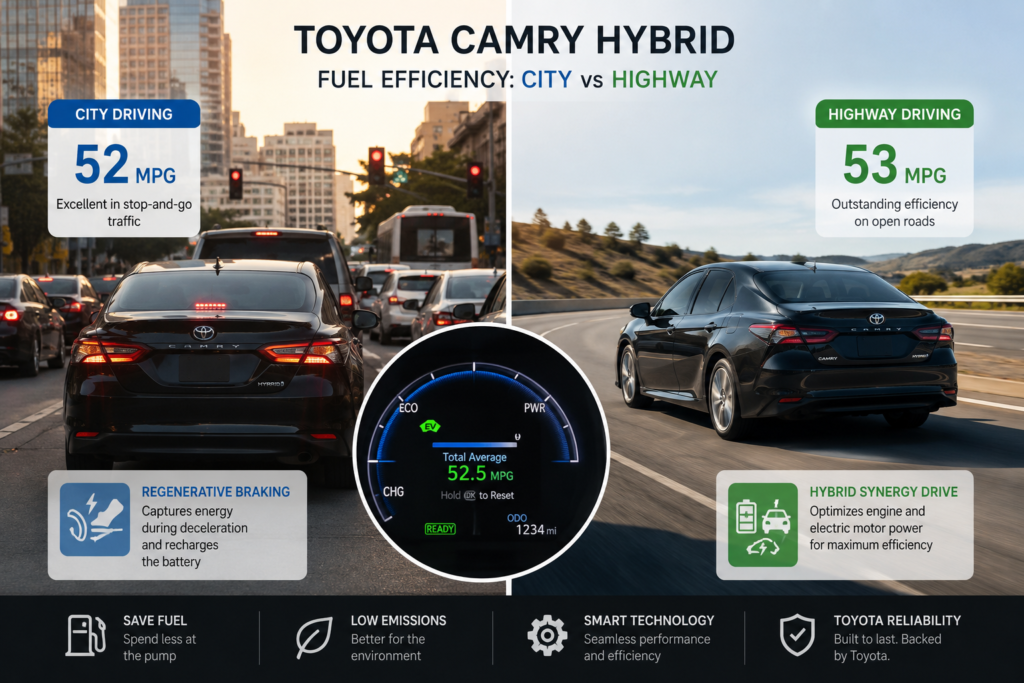
The biggest reason it saves fuel so well is that less energy gets wasted in traffic and low-speed driving.
- An electric motor helps during acceleration
- Regenerative braking recharges energy
- The engine shuts off at stoplights
- eCVT keeps engine RPM stable
- Battery supports low-speed driving
- Better thermal control in newer models
- Aerodynamics reduces fuel use on highways
Mechanics who work on older hybrids often notice smoother transitions and quieter operation in newer models.
Toyota Camry Hybrid: Engine and Battery Explained
The Camry Hybrid uses a gasoline engine with a high-voltage hybrid battery. The engine handles long-distance driving, while the battery helps in traffic and low-speed movement.
The hybrid battery does not behave like an EV battery. It stays within a safe charge range instead of going full or empty. That protects long-term battery health.
| Component | Job |
| Gasoline Engine | Main driving power |
| Electric Motor | Assists acceleration |
| Hybrid Battery | Stores energy |
| Regenerative Brakes | Recharges battery |
This setup helped newer Toyota hybrids last longer than many early critics expected.
Toyota Camry Hybrid Working Explained Step by Step
Power changes based on how the car is being driven.
Starting the car
The hybrid battery powers the system first.
Slow driving
The electric motor handles most movement.
Acceleration
The engine and motor work together.
Braking
Energy is recovered and sent back to the battery.
Highway driving
The engine becomes the main power source.
Newer models feel smoother during power changes, especially in traffic or slow driving.
How the Toyota Camry Hybrid Switches Between Power
The car automatically shifts between electric, engine, or combined power based on driving conditions.
In traffic, electric power is used more often. When more force is needed, the engine joins instantly. Most drivers adjust to this quickly and stop noticing the changes.
The Truth About How Toyota Camry Hybrids Work
Many people think the engine always charges the battery. That is not true. Energy is also recovered during braking and downhill driving.
Another misconception is that the car mostly runs on a battery. In reality, highway driving depends heavily on the gasoline engine for efficiency.
That surprises many first-time hybrid owners.
Toyota Camry Hybrid Technology Explained Clearly
The car uses a power-split setup that blends electric and gasoline power.
Early Camry hybrids focused mostly on fuel savings, while newer 2018–2026 models improved battery cooling, smoother power delivery, and quieter driving behavior. Many drivers notice the difference quickly in traffic.
Newer models feel smoother because battery cooling and power delivery have improved over time. And that matters more than most people think.
Toyota Camry Hybrid System Explained for Beginners
Think of it as two systems working together. Electric power helps in slow driving, while the engine handles higher loads.
The car does not need charging from outside. That convenience is one reason many taxi and rideshare drivers stayed with Toyota hybrids for years. It recharges itself while driving and braking, which is why many drivers find it convenient for daily use.
FAQs
Does the Toyota Camry Hybrid charge its battery while driving?
Yes. It charges through braking and engine support during normal driving.
Can a Toyota Camry Hybrid run without gasoline?
No. It still needs gasoline for full operation.
Why does the Camry Hybrid engine turn on and off so often?
It switches power sources to balance efficiency during driving.
Is the Toyota Camry Hybrid good for highway driving?
Yes. It stays efficient because both systems work together at steady speeds.
Do newer Toyota Camry hybrids work differently from older models?
Yes. Newer models use better software and cooling systems for smoother performance.
Conclusion
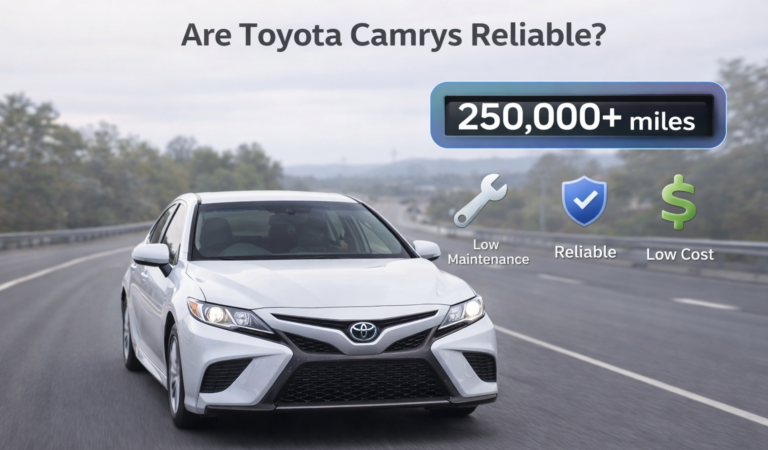
The Toyota Camry Hybrid has become popular for one simple reason: it works well in everyday driving. Owners regularly keep these cars for high mileage without major hybrid problems, especially when maintenance and cooling are handled properly. In heavy traffic, long commutes, and even taxi use, newer models feel smoother and more refined than older generations. That long-term reliability is a big reason many drivers continue trusting Toyota hybrids year after year.