Is a Toyota Camry a Full-Size Vehicle? (See Real Dimensions)
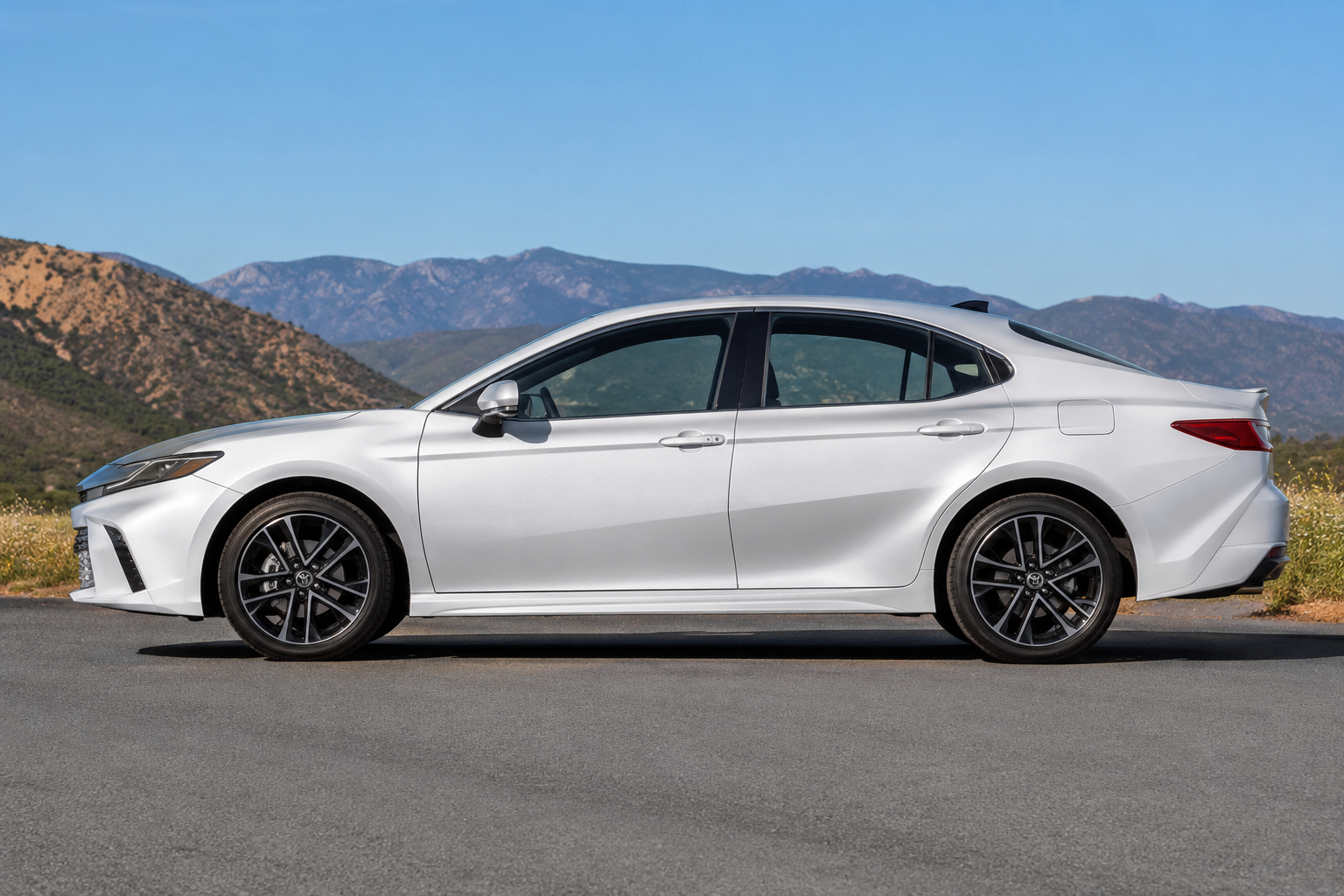
Is a Toyota Camry a full-size vehicle? No. The Toyota Camry is officially classified as a midsize sedan, not a full-size car. However, newer Camry models feel much larger inside than older generations, which is why many drivers confuse it with a full-size sedan during daily driving and highway trips.
Understanding how vehicle size categories work helps explain why the Camry feels close to full-size while technically remaining in the midsize segment.
Why Is the Camry Usually Called a Midsize Sedan?
The Camry falls into the midsize category because it balances passenger room, fuel economy, and easier city driving better than large sedans.
Most automotive organizations classify vehicles using:
- Passenger volume
- Interior space
- Overall length
- Cargo capacity
The Camry hits a sweet spot that larger sedans often miss. It offers enough room for a family of five without becoming difficult to park in tight city spaces or multi-story car parks. That combination of comfort and practicality is exactly why it outsells most competitors in its class year after year.
How Does EPA Vehicle Classification Work?
The EPA mainly classifies sedans using combined passenger and cargo volume instead of marketing terms.
| Vehicle Type | Interior Volume Range |
| Compact Sedan | Smaller cabin space |
| Midsize Sedan | Medium passenger volume |
| Full-Size Sedan | Larger interior volume |
Even though the Toyota Camry looks large from the outside, its interior measurements still place it in the midsize segment.
What Size Category Does the Toyota Camry Belong To?
The Toyota Camry belongs to the midsize sedan category across most global markets, including the United States. Toyota designed the Camry to offer family comfort without making the car too large for everyday use. In the United States, the Camry has ranked among the top-selling passenger cars for over two decades, a record that reflects how well the midsize classification fits real-world driving needs. Buyers consistently choose it because it feels spacious enough for long trips but manageable enough for daily parking and city driving.
Is the Toyota Camry a Midsize or Full-Size Sedan?
The Toyota Camry is a midsize sedan officially. It is larger than compact sedans but slightly smaller than traditional full-size cars.
| Vehicle | Category |
| Toyota Corolla | Compact |
| Toyota Camry | Midsize |
| Toyota Avalon | Full-Size |
Many newer midsize sedans now feel close to older full-size cars because cabins have become wider and quieter over time.
For practical purposes, the distinction matters most when comparing insurance rates, parking garage height limits, and fuel economy expectations. Midsize sedans like the Camry typically deliver better fuel economy than full-size alternatives, and they fit more easily in standard parking spaces, two factors that matter significantly for daily commuters.
Also Read: Is A Toyota Camry A Compact Car?
How Much Interior Space Does the Camry Have?
Most 2018 to 2026 Camry models offer generous legroom and headroom for five passengers. Rear-seat space improved noticeably after Toyota redesigned the platform in recent generations.
Adults can usually sit comfortably in the back without feeling cramped during long drives.
Front seat passengers in newer Camry models typically enjoy around 42 inches of legroom, while rear passengers get approximately 38 to 40 inches, depending on trim. That rear legroom figure puts the Camry comfortably ahead of most compact sedans and on par with some entry-level full-size vehicles.
How Big Is a Toyota Camry Compared to Other Sedans?
The Camry is larger than many compact sedans, but it still stays slightly below true full-size sedans in overall cabin volume and length.
Some drivers moving from a Corolla or Civic often feel surprised by how spacious the Camry feels inside.
Is the Camry Larger Than the Toyota Corolla?
Yes. The Toyota Camry is noticeably larger than the Corolla in passenger room, trunk size, and rear-seat comfort.
Main differences include:
- More rear legroom
- Wider cabin space
- Larger trunk
- Smoother highway ride
That extra size makes the Camry more comfortable for families and highway driving.
How Does the Camry Compare to the Toyota Avalon?
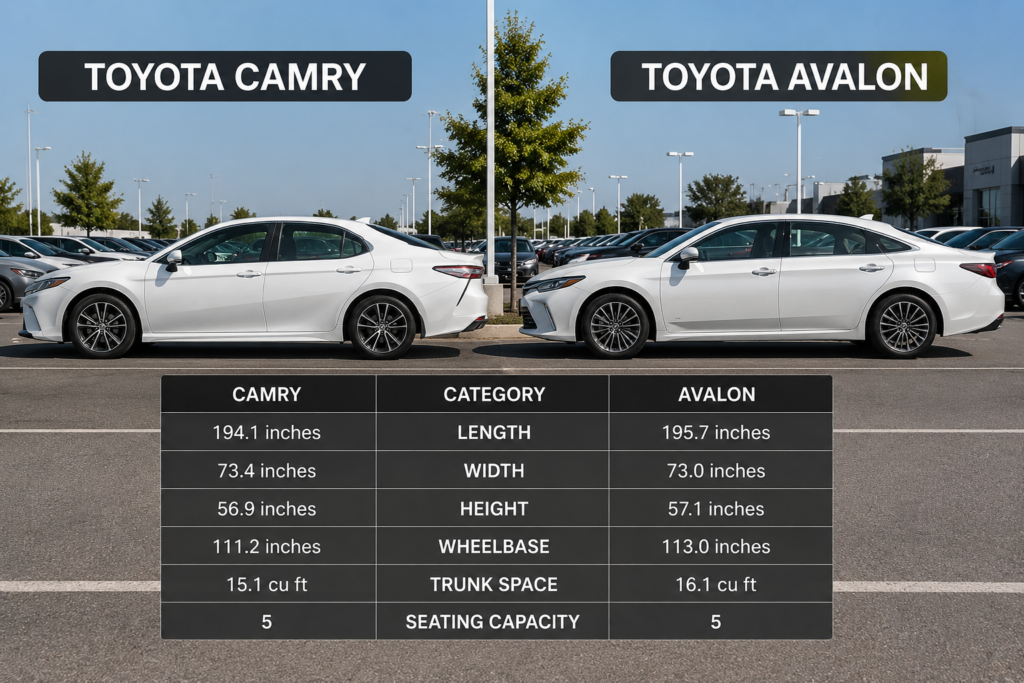
The Toyota Avalon was Toyota’s full-size sedan before production ended in North America. The Avalon offered a softer ride and slightly larger rear-seat area than the Camry.
| Feature | Camry | Avalon |
| Vehicle Class | Midsize | Full-Size |
| Ride Feel | Sportier | Softer |
| Rear Legroom | Spacious | Larger |
| Parking Ease | Easier | Slightly harder |
A lot of drivers still think the Camry became almost Avalon-sized after the newer redesigns.
Is the Camry Close in Size to Full-Size Sedans?
Yes, especially newer 2018 to 2026 models. Modern midsize sedans have grown enough that the size gap is smaller than before.
Still, full-size sedans usually offer:
- Longer wheelbases
- Bigger rear-seat comfort
- Softer suspension tuning
- More cargo room
The Camry focuses more on balance than maximum size.
Why Do Some People Think the Camry Is Full-Size?
Many people assume the Camry is full-size because newer models feel wider, quieter, and more premium than older midsize sedans.
The lower roofline and longer body shape also make the car appear larger on the road than earlier Camry generations.
Do Newer Camry Models Feel Bigger Inside?
Yes. Toyota improved cabin space, seat comfort, and interior design significantly after the TNGA platform redesign.
A lot of owners upgrading from older 2007 to 2014 Camrys notice:
- Better rear-seat comfort
- Wider center console area
- More shoulder room
- Quieter cabin insulation
That added comfort makes the car feel closer to a near-luxury sedan.
Are Modern Midsize Cars Almost Full-Size Now?
In many ways, yes. Modern midsize sedans became larger over the past decade because buyers wanted more comfort without switching to SUVs.
That is why cars like the Camry, Accord, and Altima now feel much larger than midsize sedans from the early 2000s. A 2026 Toyota Camry is actually longer than a 2000 Toyota Avalon, Toyota’s old full-size sedan. That comparison shows how dramatically midsize cars have grown over 25 years. The classification stayed the same, but the car itself grew significantly in every measurable dimension.
Toyota Camry Dimensions Explained
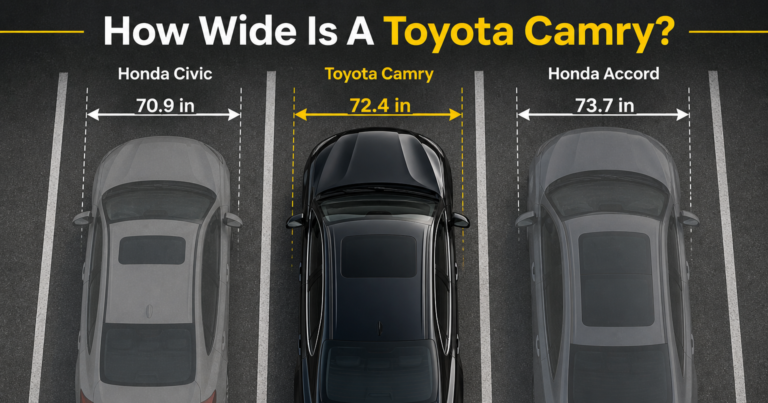
Toyota Camry dimensions changed with every major redesign, but the car stayed within the midsize category throughout its history. The most significant dimensional changes came in 2012 and again in 2018, when Toyota widened the cabin, lowered the roofline, and stretched the wheelbase to improve both stability and rear passenger comfort. These changes made newer Camrys feel noticeably more substantial on the road without crossing into full-size territory.
How Long Is a Toyota Camry?
Most modern Toyota Camry models measure around 192 inches long, depending on trim and model year.
| Camry Generation | Approximate Length |
| 2007 to 2011 | Around 189 inches |
| 2012 to 2017 | Around 190 inches |
| 2018 to 2026 | Around 192 inches |
That increase helped improve rear-seat comfort and trunk space.
How Much Trunk Space Does the Camry Offer?
Most Toyota Camry models offer enough trunk space for daily family use, groceries, airport luggage, and road trips.
The trunk usually fits:
- Multiple suitcases
- Sports bags
- Folded strollers
- Weekly grocery loads
Most gas-powered Camry models offer around 15 cubic feet of trunk space, which is competitive within the midsize segment. Hybrid models offer slightly less due to battery placement, but the difference rarely affects daily use. The trunk opening is wide enough to load and unload luggage easily, which matters more than raw cubic footage on most family trips.
Toyota Camry Size by Model Year
Toyota gradually increased the Camry’s size and refinement across each generation. The shift from the 2017 to the 2018 model was the most dramatic. Toyota lowered the roofline, widened the cabin, and improved rear-seat legroom noticeably. Earlier generations from 2007 to 2014 focused on reliability and simplicity, while post-2018 models shifted toward a more premium driving experience with sportier styling and quieter interiors.
Did the Camry Grow Larger After 2018?
Yes. The 2018 redesign made the Camry longer, lower, and wider than older generations.
Many drivers noticed:
- Improved rear-seat room
- Better shoulder space
- More stable highway handling
- Larger interior feel
That redesign is one reason some owners now mistake the Camry for a full-size sedan.
Is the Toyota Camry Comfortable for Families?
Yes. The Toyota Camry works very well as a family sedan because it combines rear-seat comfort, fuel efficiency, and good trunk space in one package. Families often prefer the Camry because it feels roomy without becoming difficult to park in crowded areas.
The combination of a wide trunk opening, rear AC vents on most trims, and a smooth suspension makes the Camry genuinely practical for school runs, weekend trips, and airport pickups. Parents with young children also appreciate the wide rear door opening, which makes installing child seats noticeably easier than in smaller sedans.
Can Adults Sit Comfortably in the Back?
Yes. Most adults fit comfortably in the rear seats, especially in 2018 to 2026 Camry models.
Rear passengers usually get:
- Good legroom
- Comfortable seat cushioning
- Decent headroom
- Rear AC vents on higher trims
Tall passengers may still notice less headroom than in boxier SUVs.
Does the Toyota Camry Drive Like a Full-Size Car?
The Camry drives smoother than many smaller sedans, but it still feels easier to control than large full-size cars.
Toyota tuned the suspension to balance:
- Comfort
- Fuel economy
- Steering response
- Highway stability
That balanced driving feel is one reason many commuters choose the Camry.
Why Does the Camry Feel More Premium Now?
Newer Camry models added quieter cabins, softer materials, and better suspension tuning compared to older generations.
Some higher trims now include:
- Large multimedia screens
- Leather seating
- Acoustic glass
- Ambient lighting
That premium feeling sometimes makes drivers assume the car belongs in the full-size category.
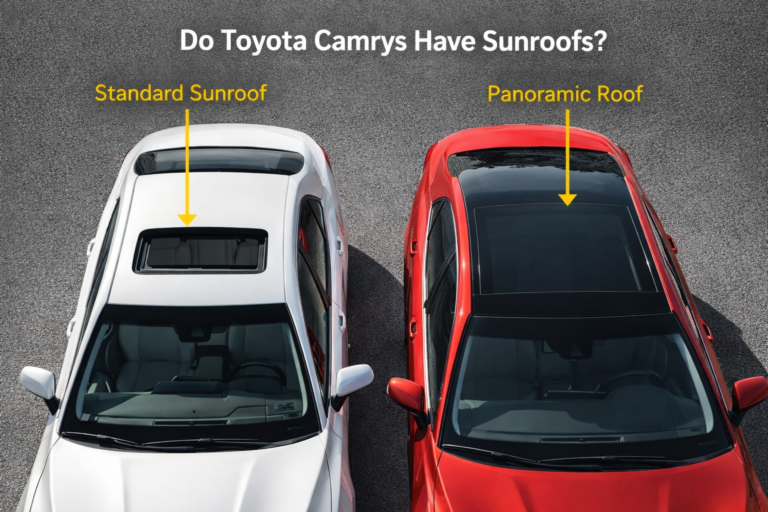
Read Our Guide: Do Toyota Camrys Have Sunroofs?
Common Misunderstandings About Camry Size
A lot of confusion comes from how much midsize sedans have changed over the years. Modern Camrys are larger than many older full-size sedans from the early 2000s.
That overlap in size makes the classification less obvious to average drivers.
Another common misunderstanding comes from comparing the Camry to older vehicles. Drivers who previously owned a full-size sedan from the 1990s or early 2000s often find that a new Camry feels equally spacious or larger. That experience is accurate — modern engineering allows midsize vehicles to deliver interior space that older full-size cars could not match, despite their larger external footprint.
Is the Camry Officially a Full-Size Vehicle?
No. The Toyota Camry is officially classified as a midsize sedan, even in newer 2025 and 2026 models.
The car may feel large and spacious, but government vehicle classifications and Toyota still place it in the midsize category.
FAQs
Is the Toyota Camry officially considered a full-size sedan?
No. The Toyota Camry is officially classified as a midsize sedan based on EPA interior volume measurements.
Can five adults sit comfortably inside a Toyota Camry?
Yes. Most modern Camry models have enough rear-seat and shoulder room for five adults during normal daily driving.
Why does the Toyota Camry feel larger than older sedans?
Newer Camry generations became wider, longer, and quieter, which makes them feel closer to premium full-size sedans on the road.
Is the Toyota Camry bigger than a Toyota Corolla?
Yes. The Camry offers noticeably more passenger room, trunk space, and rear-seat comfort than the Corolla.
Does the Toyota Camry have enough trunk space for family trips?
Yes. Most Camry models provide enough cargo room for luggage, groceries, and normal family travel needs.
Conclusion
The Toyota Camry is not officially a full-size vehicle, but modern models definitely feel larger and more refined than many older midsize sedans. Toyota improved cabin comfort, rear-seat space, and highway stability over the years, especially after the 2018 redesign. That is why many drivers mistakenly think the Camry belongs in the full-size category. For most families and commuters, the Camry gives a strong balance of comfort, fuel economy, interior space, and easier parking compared to larger full-size sedans or SUVs.
Choosing the Camry over a full-size sedan usually means accepting a slightly smaller rear seat in exchange for better fuel economy, easier parking, and lower ownership costs. For most families and daily commuters, that trade-off works in their favor. The Camry delivers near full-size comfort in a package that remains genuinely practical across all driving situations.