
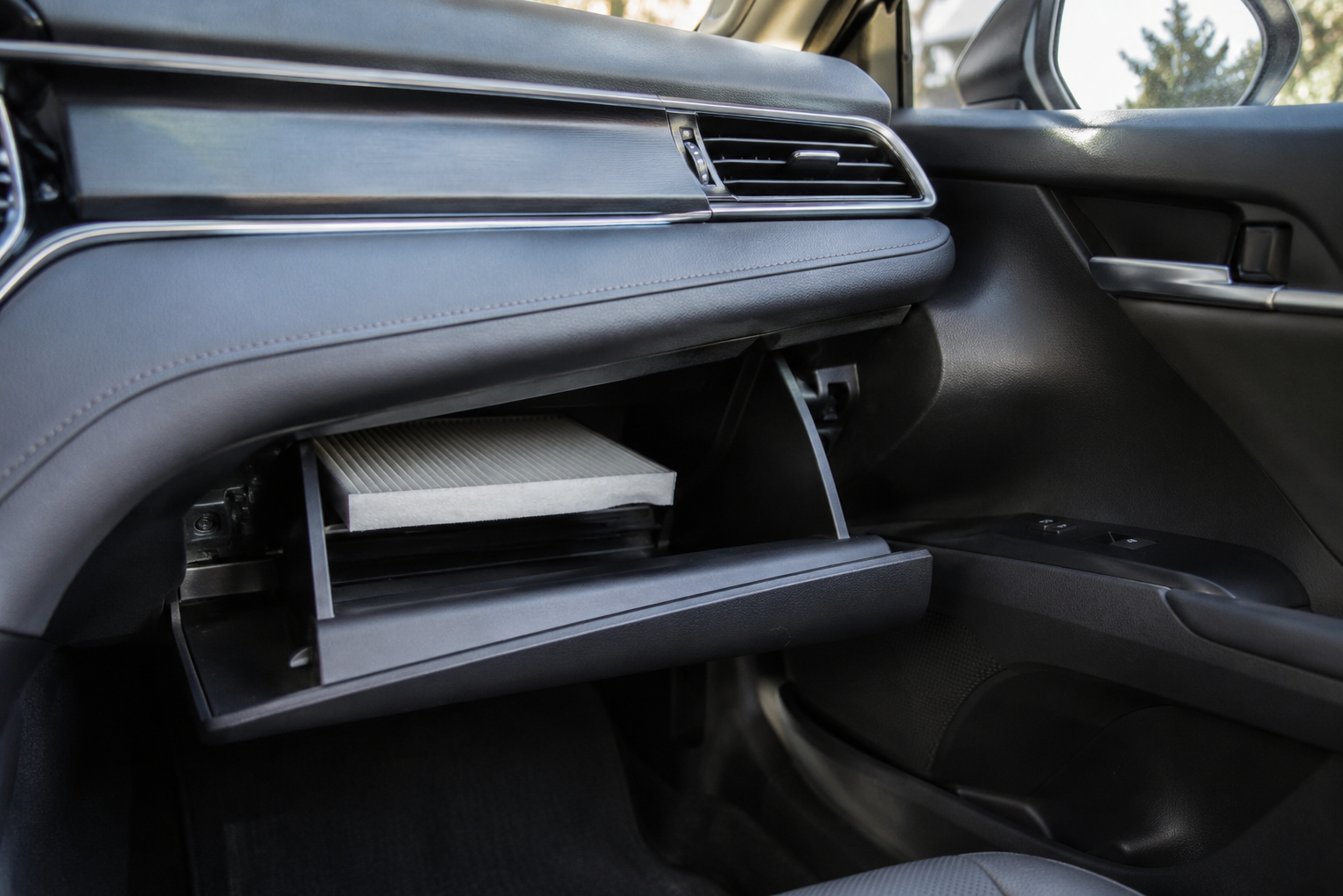
How to Change Cabin Air Filter in a Toyota Camry? (Quick Filter Fix)
How to change the cabin air filter in a Toyota Camry? Open the glove box, remove the damper arm, access the filter cover, and swap the old filter for a new one. Most owners finish the job in under 20 minutes with no special tools.
In this guide, you will learn step by step how to replace the cabin air filter in Toyota Camry models from 2002 to 2026, what signs mean it is time for a change, and what mistakes to avoid.
Also Read: How Often To Change the Engine Air Filter Toyota Camry
What Does the Cabin Air Filter Do in a Toyota Camry?
The cabin air filter cleans the air that comes into the car through the AC and heater vents. It traps dust, pollen and other particles before they reach the cabin.
In many older Camrys, owners usually notice weak airflow first, before realising the filter is clogged.
| Cabin Air Filter Job | Why It Matters |
| Blocks dust and pollen | Cleaner cabin air |
| Helps AC airflow | Better cooling performance |
| Reduces bad smells | Fresher interior air |
| Protects the HVAC system | Less blower motor strain |
Signs the Cabin Air Filter Is Dirty
A dirty cabin filter usually causes airflow problems before owners actually see the filter itself.
Common signs include:
- Weak airflow from the vents
- A dusty smell inside the cabin
- Foggy windows when using the AC
- Louder blower fan noise
- AC is taking longer to cool
Some Camry owners also notice leaves and debris falling from the vents after years without a replacement.
Where Is the Cabin Air Filter Located in a Toyota Camry?
In almost every Toyota Camry from 2002 to 2026, the cabin air filter sits behind the glove box on the passenger side.
That is one reason many owners replace the filter themselves instead of paying dealer labour costs.
Cabin Air Filter Location in 2018 to 2026 Camry Models
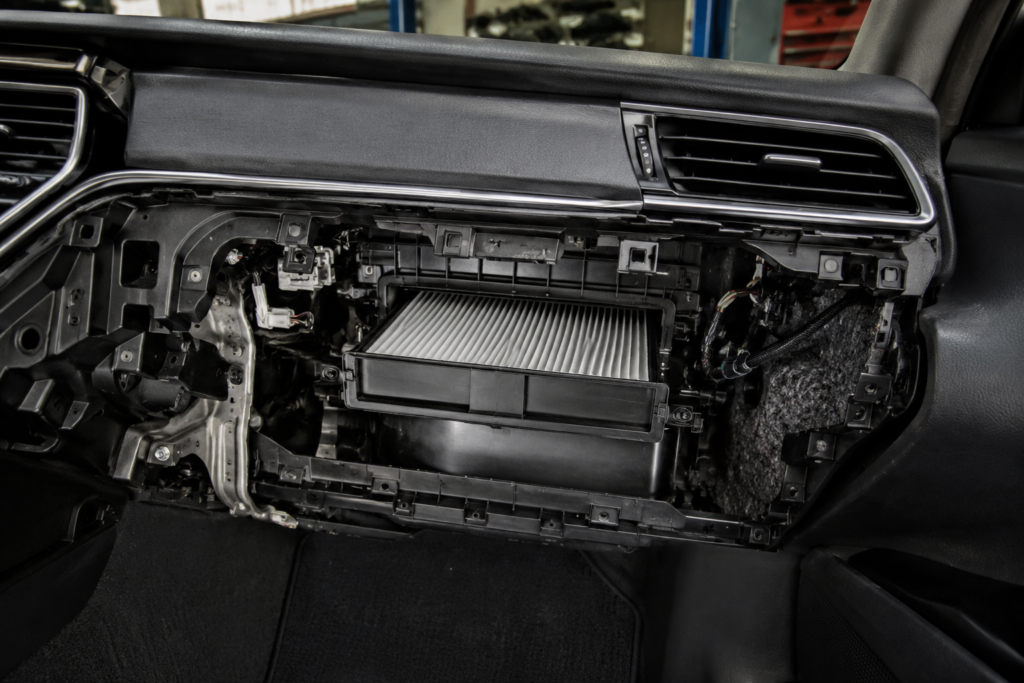
Newer Camry models still place the filter behind the glove box, but the trim panels and dampers feel tighter and more fragile.
A lot of first-time DIY owners think something is stuck, because the glove box does not drop straight away.
| Camry Years | Filter Location | Access Difficulty |
| 2002 to 2011 | Behind the glove box | Easy |
| 2012 to 2017 | Behind the glove box | Easy–Moderate |
| 2018 to 2026 | Behind the glove box with tighter clips | Moderate |
Tools Needed to Change the Cabin Air Filter
Most Toyota Camry cabin air filter replacements need very few tools. That is why this is seen as an easy DIY job.
You will usually need:
- New cabin air filter
- Small flashlight
- Clean microfiber cloth
- Vacuum for dust cleanup
Some owners use a trim tool, but most Camrys can be opened by hand without special equipment.
Read Guide: How to Open the Hood of a Toyota Camry
Choosing the Correct Replacement Filter
The correct filter depends on the Camry model year and trim level. A wrong-sized filter may leave gaps that let dust through.
Before buying, check:
- Camry model year
- Engine trim
- OEM filter number
- Filter dimensions
Many aftermarket filters look identical online, but fit differently once installed.
Which Filter Does My Camry Need?
The right filter depends on the year and model of your Camry. A filter that fits one year may not fit another, so always check before you buy.
You can find the right filter in three ways. First, look for the number printed on the side of the old filter. Second, check the owner’s manual. Third, ask a parts store or dealer, using the car’s VIN or year.
Standard filters and charcoal, or activated carbon, filters both fit the same slot on most models. Charcoal filters can help more with smells.
OEM vs Aftermarket Cabin Air Filters
OEM Toyota filters usually fit more precisely, while aftermarket filters give more price options and extra features like activated carbon layers.
| Filter Type | Main Advantage | Main Drawback |
| OEM Toyota Filter | Exact factory fit | Higher price |
| Standard Aftermarket | Lower cost | Quality varies |
| Activated Carbon Filter | Better odor control | Slightly more expensive |
For normal daily driving, a quality aftermarket filter usually works fine if the size matches.
How to Change Cabin Air Filter in Toyota Camry
Learning how to change the cabin air filter in a Toyota Camry usually takes less than 15 minutes. The first time is the slowest, because you are still learning where the clips are.
Most owners finish the job faster the second time, because the glove box clips become easier to understand.
Step 1: Open and Empty the Glove Box
Remove papers, manuals and loose items first. A heavy glove box can drop suddenly once the side clips are released.
Step 2: Remove the Glove Box Damper Arm
The small damper arm slows the glove box when opening. Gently slide it off the side hook without forcing it.
Step 3: Access the Cabin Air Filter Cover
After lowering the glove box, the rectangular filter cover becomes visible behind it. Press the side tabs to release it.
Some newer 2020 to 2026 Camrys use tighter plastic tabs that feel stiff at first.
Step 4: Remove the Old Cabin Air Filter
Slide the old filter out slowly, because leaves, dust and pollen often collect heavily inside the tray. Technicians sometimes find filters completely dark grey after owners skip replacement for several years.
Step 5: Install the New Cabin Air Filter Correctly
Match the airflow arrow direction before sliding the new filter into place. Most Camry filters show the direction on the side.
Installing the filter backwards is still one of the most common DIY mistakes.
Step 6: Reassemble the Glove Box
Reattach the filter cover, reconnect the damper arm, and lift the glove box back into position carefully.
Before closing everything fully, many mechanics quickly test the AC airflow to confirm the filter sits correctly.
Common Mistakes People Make During Replacement
Most cabin air filter mistakes are small, but they can still affect airflow and interior air quality.
Installing the Filter Backward
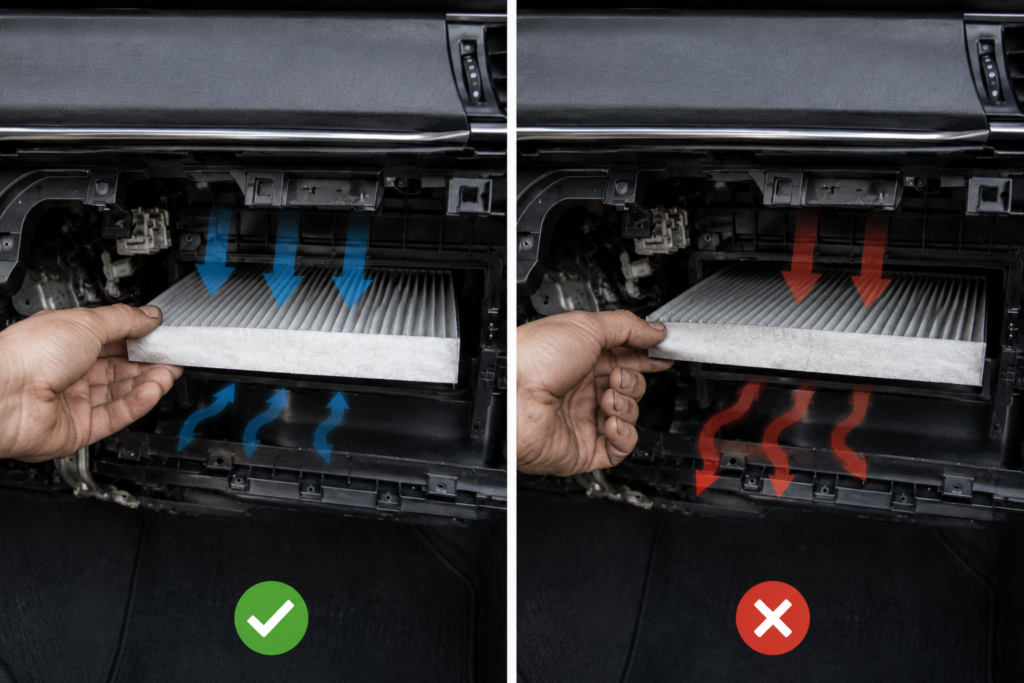
The airflow arrow must point in the correct direction. Wrong installation can reduce airflow and increase strain on the blower.
Some drivers never realise the mistake until the AC starts feeling weaker during summer traffic.
Using the Wrong Filter Size
Even filters that look similar may not seal properly inside the housing. Small gaps allow dirt and pollen into the cabin.
Cheap filters sometimes bend at the edges after installation, especially on older high-mileage Camrys.
How to Tell If the New Cabin Air Filter Is Installed Properly
A properly installed filter usually improves airflow almost immediately. The AC system should sound smoother and feel stronger.
In dusty cities or hotter climates, owners often notice the difference within the first few minutes of driving.
Better Airflow From the Vents
If airflow feels stronger and cleaner, the filter is usually seated correctly.
Good signs include:
- Faster cabin cooling
- Less dust smell
- Smoother airflow sound
- Reduced window fogging
Some Camry owners also notice the blower fan becomes quieter after replacement.
DIY vs Mechanic Cabin Air Filter Replacement
Cabin air filter replacement is one of the cheapest maintenance jobs to do at home. Most repair shops charge mainly for labour, not parts.
| Replacement Method | Average Cost | Typical Time |
| DIY Replacement | $15 to $40 | 10 to 20 minutes |
| Repair Shop | $50 to $120 | 15 to 30 minutes |
| Dealership Service | $70 to $150 | 20 to 40 minutes |
For many owners, DIY replacement makes more sense, because the process is simple once you understand where the clips are.
Average Replacement Cost at Repair Shops
Repair shop pricing depends mostly on labour rates and filter quality. Dealerships usually charge more than independent shops.
A lot of Camry owners are surprised when a basic cabin filter replacement gets bundled into larger maintenance packages, increasing the total bill.
FAQs
Can a dirty cabin air filter make the Toyota Camry AC airflow weak?
Yes. A clogged cabin air filter can block airflow and make the AC feel much weaker, especially during hot weather.
Does a Toyota Camry cabin air filter help with bad smells?
Yes. A clean cabin air filter helps reduce dust, smoke and outside odours entering through the AC vents.
How often should you change the cabin air filter in a Toyota Camry?
Most Camry cabin air filters should be replaced every 12,000 to 20,000 miles, depending on driving conditions and dust exposure.
Why does my Toyota Camry still smell bad after replacing the cabin air filter?
A bad smell can sometimes come from mould inside the AC evaporator instead of the cabin air filter itself.
Is the cabin air filter in all Toyota Camry models located behind the glove box?
No. Most modern Camrys use that location, but some older trims and international versions may differ.
If Something Breaks, or the Smell Stays
If a glove-box clip or the small damper arm breaks, do not force it. Forcing it can crack the glove box. A shop can fix it for a small cost.
If a bad smell stays after a new filter, the air-conditioning system may have mould and needs a proper cleaning at a shop.
If airflow is still weak with a new filter, see a mechanic.
Conclusion:
Replacing the cabin air filter in a Toyota Camry is a simple maintenance job that improves airflow, removes odours and helps the AC work better.
For more help with your Camry, read How Many Quarts Of Oil Does A Toyota Camry Need? (Oil Capacity Guide) and How to Reset Maintenance Light on Toyota Camry? Quick Reset! You can also check the official Toyota Camry page for the latest model details.
Read Next: How Many Quarts Of Oil Does A Toyota Camry Need? (Oil Capacity Guide)





4 Comments