Which Is Better: Toyota Corolla or Toyota Camry? (See the Verdict)
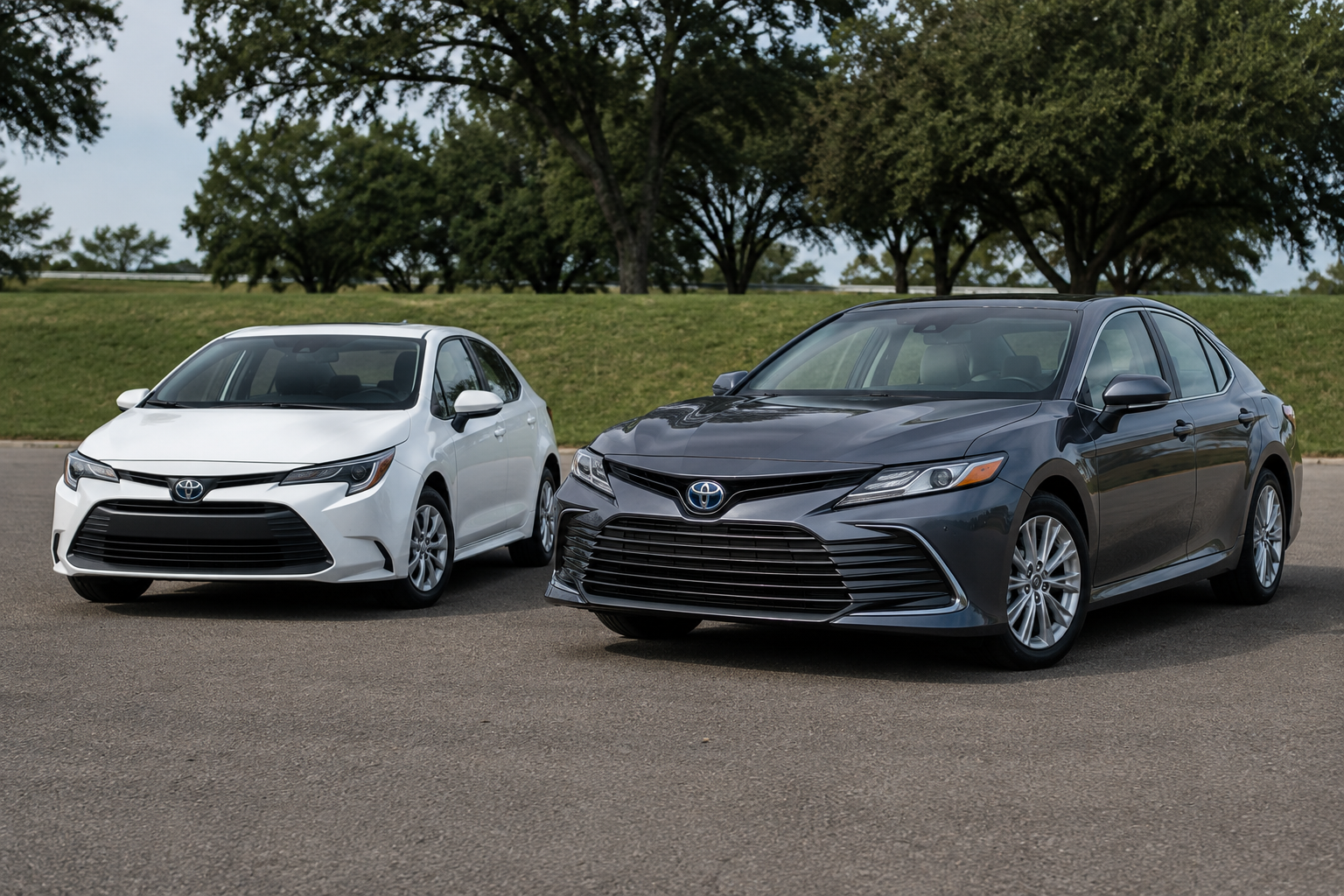
Standing in a Toyota showroom staring at both a Corolla and a Camry, most buyers freeze on the same question: which one actually makes more sense for me? They share a badge, a reputation for reliability, and a loyal fan base, but the similarities mostly end there. One is built to be cheap to own and easy to park. The other is built to be roomy, quiet, and comfortable on a four-hour drive.
By the time you finish this guide, you will know exactly which one fits your life, your budget, and your driveway.
Toyota Corolla vs. Camry Quick Comparison Overview
At-a-Glance Comparison Table
Numbers settle arguments faster than opinions do, so here is the 2026 lineup side-by-side before we get into the details.
| Spec | Toyota Corolla (2026) | Toyota Camry (2026) |
| Starting Price | 23,125 (gas) / 25,970 (hybrid) | $29,000 |
| Body Class | Compact sedan | Midsize sedan |
| Engine Options | 2.0L 4-cyl gas, 1.8L hybrid | 2.5L hybrid only (all trims) |
| Combined MPG | 35 mpg gas (combined), 53 city / 46 hwy / 50 combined (hybrid) | Up to 51 mpg combined (52 city / 49 hwy) |
| Horsepower | 169 hp (gas), 138 hp (hybrid) | 225 to 232 hp |
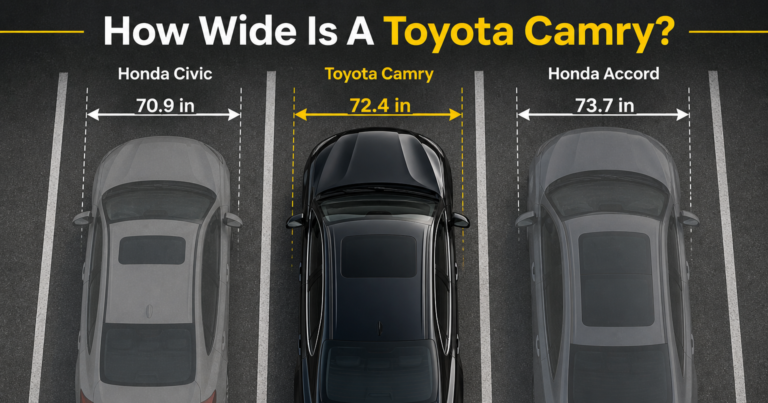
| Length | 182.3 inches | 193.7 inches |
| Seating | 5 | 5 |
This table alone tells most of the story: the Corolla is the budget-and-efficiency pick, and the Camry is the space-and-power pick.
The Short Answer: Which Should You Choose?
If you want the lowest possible price, the smallest footprint for city parking, and a car that sips gas, the Corolla wins outright. If you want a roomier cabin, a quieter highway ride, and noticeably more power without sacrificing much fuel economy, the Camry is the smarter buy, especially now that every 2026 Camry comes standard as a hybrid. Neither car is wrong; they are just built for two different daily routines.
Toyota Corolla vs. Camry Price Comparison
Starting MSRP by Trim
The price gap between these two cars is bigger than most shoppers expect, and it grows fast as you climb the trim ladder. A base gas Corolla LE starts around $23,125, while the Corolla Hybrid LE runs about $25,970. On the Camry side, every 2026 trim is hybrid from the factory, with the LE starting at $29,000 and the range-topping XSE landing near $35,500. So even the cheapest Camry costs roughly $3,000 more than the priciest standard Corolla Hybrid, and that gap widens further once you compare matching trim levels like XLE to XLE.
Insurance & Ownership Cost Differences
Smaller, lighter, and cheaper to repair, the Corolla typically costs less to insure than the Camry. The exact gap varies significantly by driver age, location, and driving record, so it is worth getting quotes for both before assuming the savings. Maintenance costs track closely between the two since they share Toyota’s parts network and service intervals. Routine costs like oil changes and tire rotations are nearly identical across both models, since Toyota standardizes service pricing across its sedan lineup. For a young driver or a first car, that insurance gap alone often tips the decision toward the Corolla.
Also Read: How Much Is a Toyota Camry?
Size, Space & Comfort Corolla vs. Camry
Interior Space & Legroom
Sit in a Corolla after driving a Camry, and the difference is immediate, not subtle. The Camry’s 111.2-inch wheelbase is nearly 5 inches longer than the Corolla’s 106.3-inch wheelbase, and that extra length translates directly into noticeably more rear legroom, which matters most for adults sitting behind adults on a real road trip rather than a quick errand. The Corolla is not cramped by compact-car standards, and front-seat space is genuinely comfortable for taller drivers, but the back seat is where it falls behind. If you regularly carry rear passengers over 5’10, the Camry’s extra few inches of legroom will be felt on every single drive.
Which is Better for Families?
For families, this comparison usually comes down to one thing: car seats and stroller hauling.
- Camry advantage: Easier two-car-seat installs in the back row, wider rear doors for buckling in toddlers, and a trunk that swallows a full-size stroller without a fight.
- Corolla advantage: Tighter turning radius makes daycare pickup lines and parking garages far less stressful.
- Real-world tradeoff: Families with two or more kids tend to outgrow the Corolla’s back seat within a couple of years, while the Camry comfortably handles car seats well into the booster-seat years.
Performance & Driving Experience
Engine Options Compared
The 2026 lineup actually simplified one side of this comparison: every Camry trim is now hybrid-only, putting out 225 horsepower in front-wheel drive and 232 horsepower with all-wheel drive, a setup that genuinely feels quick for a family sedan. The Corolla still gives you a choice. The standard 2.0-liter gas engine makes 169 horsepower, fine for daily driving but noticeably less eager on highway on-ramps, while the Corolla Hybrid trades some power (138 horsepower) for serious fuel savings. In short, if power matters to you at all, the Camry is not close; it simply has more muscle in every trim.
Handling & Ride Quality
The Corolla feels like what it is: a smaller, lighter car that darts into gaps in traffic and parks itself into spots a Camry would not even attempt. That same light weight makes it more affected by potholes and rough pavement, though. The Camry, by contrast, soaks up highway expansion joints and rough city streets with a noticeably calmer ride, the kind of difference you only really notice after a two-hour drive in each. City commuters tend to prefer the Corolla’s nimbleness; highway commuters and road-trippers almost always prefer the Camry’s composure.
Fuel Economy: Corolla vs. Camry MPG
Hybrid Corolla vs. Hybrid Camry
This is where the comparison gets genuinely interesting, because both cars now offer a hybrid, and the gap is smaller than you’d guess.
| Hybrid Model | City MPG | Highway MPG | Combined MPG |
| Corolla Hybrid LE | 53 | 46 | 50 |
| Camry Hybrid LE | 52 | 49 | 51 |
The Corolla Hybrid technically wins city mpg, but the Camry Hybrid actually edges ahead on combined and highway numbers, an impressive feat for a car carrying significantly more size and power. If your daily driving is mostly highway miles, the Camry Hybrid may genuinely sip less gas than you had expected from a midsize sedan.
Reliability & Long-Term Ownership
Resale Value Comparison
Both nameplates consistently rank among the strongest resale performers in their segments, a reputation built on Toyota’s track record for engines and transmissions that routinely last well past 150,000 miles with basic maintenance. Because resale percentages shift year to year based on used-car demand and supply, the more reliable way to compare them is to check current values for your specific trim and mileage on a site like Kelley Blue Book or Edmunds before buying. What stays consistent either way: both cars are widely considered safer bets for resale than most non-Toyota competitors in their class.
Which Has a Better Reliability Track Record?
Both the Corolla and Camry are widely recognized as two of the most dependable nameplates Toyota makes, and both regularly appear near the top of independent reliability rankings. The Corolla’s simpler mechanical layout in its gas trims gives it a slight reliability edge on paper, since fewer components generally mean fewer things that can fail. The Camry’s hybrid-only 2026 lineup is newer technology by comparison, but Toyota’s hybrid systems, refined over two decades, have proven just as dependable in real-world ownership data. For an exact reliability comparison on your specific year and trim, checking a source like Consumer Reports or RepairPal before buying is the most reliable way to confirm current ratings.
Safety Ratings Corolla vs. Camry
Both the Corolla and Camry come standard with Toyota Safety Sense 3.0 across every 2026 trim, which includes automatic emergency braking, lane-centering assist, and adaptive cruise control at no extra cost. Historically, both nameplates have earned top safety honors from independent crash-testing organizations in the U.S., reflecting Toyota’s consistent investment in structural safety and driver-assist technology across its sedan lineup.
Because safety ratings are updated annually and can vary by trim and model year, checking the current-year rating directly on the IIHS or NHTSA website before buying is the most reliable way to confirm a specific car’s score.
FAQs
Is the Toyota Camry more expensive than the Corolla?
Yes. The 2026 Camry starts at $29,000, while the Corolla starts around $23,125 for the gas model, a gap of roughly $5,000 to $6,000 depending on trim.
Which has better gas mileage, Corolla or Camry?
In city mpg, the Corolla Hybrid edges ahead at 53 mpg versus the Camry Hybrid’s 52 mpg. But look at combined mpg, the number that matters most for real-world driving, and the Camry Hybrid actually wins at 51 mpg combined versus the Corolla Hybrid’s 50 mpg.
Is the Camry bigger than the Corolla?
Yes, noticeably. The Camry measures 193.7 inches long compared to the Corolla’s 182.3 inches, and that extra length shows up across the wheelbase, rear-seat legroom, and trunk space.
Which Toyota holds its value better, Corolla or Camry?
Both hold their value exceptionally well compared with rival sedans, a reputation built on Toyota’s reliability record. Exact depreciation rates shift year to year, so checking current resale values for your specific trim on KBB or Edmunds is the most accurate way to compare.
Can the Camry and Corolla both come as hybrids?
Yes. Every 2026 Camry trim is hybrid-only, while the Corolla offers buyers a choice between a standard gas engine and an optional hybrid powertrain.
Conclusion
There is no universal winner here, only the right fit for how you actually drive. Choose the Corolla if your priority is a lower price tag, cheaper insurance, and a fuel-sipping commuter that’s easy to park. Choose the Camry if you want more rear-seat space, more highway comfort, and noticeably more power, especially now that its hybrid powertrain closes most of the old mpg gap. Still torn between the two? Drive them back-to-back on the same road, and the difference in size and power will answer the question for you.