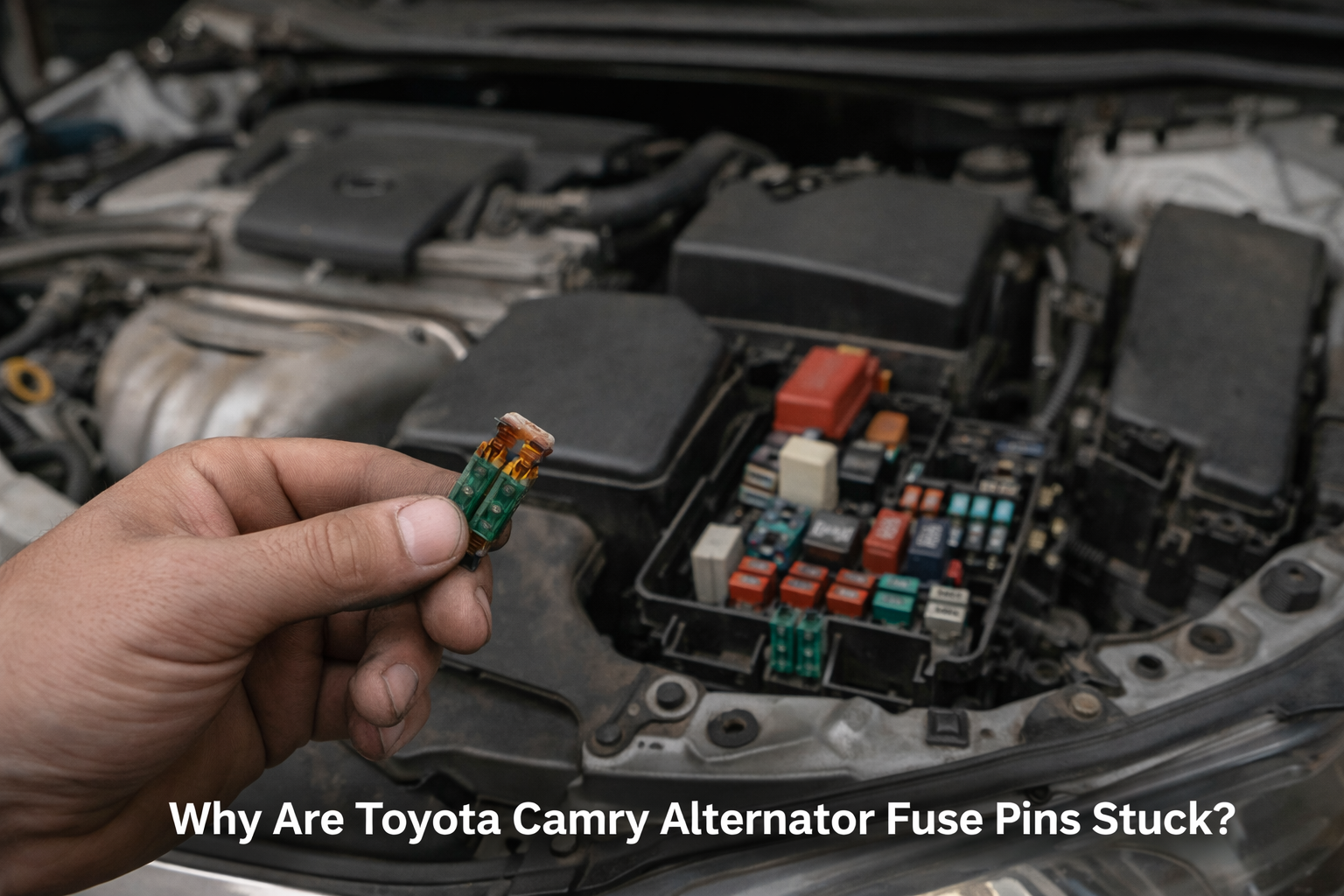
Why Are Toyota Camry Alternator Fuse Pins Stuck? (Find the Cause)
In real workshops, a stuck alternator fuse is treated as a warning sign of heat or charging system stress. It is rarely just a fuse problem. Most Toyota Camry cases are linked to overheating, corrosion, or alternator overcharge that slowly damages the fuse housing.
This guide explains the real causes, safe fixes, and how to avoid costly repairs.
How Do You Diagnose If the Fuse or Alternator Is the Real Problem?
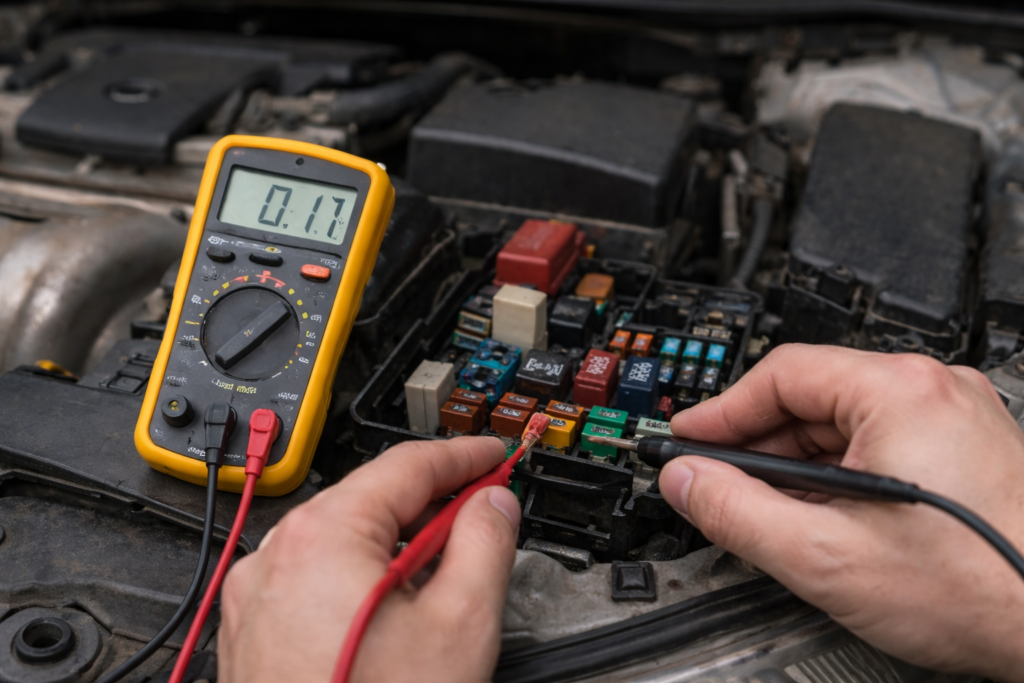
In real diagnostics, we do not just check if the fuse is blown. We check the voltage under load. A fuse can look fine but still fail when the current demand increases. This is where many people misdiagnose the issue.
Why does this happen in Camry Models?
In Toyota Camry models (especially 2012 to 2026), fuse box heat issues are more common in vehicles with aging alternators or aftermarket electrical loads like sound systems or LED upgrades. These systems increase current pressure on the charging circuit, which slowly weakens fuse terminals over time.
In real garage cases, we usually see two patterns. Either the fuse melts slightly and sticks during removal, or the alternator starts overcharging and slowly burns the fuse terminal. In both cases, drivers only notice it when the car starts showing charging warnings or random battery drain.
fuse box data for 2012 to 2017 Camry models
What Happens If You Ignore a Stuck Fuse
Ignoring a stuck alternator fuse can lead to unstable charging, battery drainage, or alternator overload. In some cases, it can also damage the fuse box permanently, making repair costs significantly higher. If ignored, this issue can cause damage to the alternator and battery together, increasing repair costs from a simple fuse fix to a full charging system replacement.
In some cases, this leads to charging circuit failure, where the alternator keeps working but cannot send proper power to the battery. That is when drivers face sudden breakdowns without warning.
In worst cases, the car may suddenly stop charging while driving. The battery drains, the dashboard lights go off, and the engine shuts down completely.
Also Read: Why 2011 Toyota Camry Shut Off When Stopping?
Early Warning Signs Before the Fuse Gets Stuck
- Slight burning smell near the fuse box
- Random battery warning light
- Flickering headlights
- Hard start in the morning
Can a Bad Alternator Cause the Fuse to Stick?
Yes, indirectly.
- Overcharging creates heat
- Voltage spikes damage fuse terminals
- Continuous load weakens the fuse slot
In a few cases, we also see something called voltage ripple, where unstable current flow slowly damages fuse terminals over time.
How Do You Test the Fuse With a Multimeter?
Quick and simple test:
- Set the multimeter to continuity mode
- Touch both fuse ends
- No beep = blown fuse
What Causes Alternator Fuse Pins to Get Stuck?
Alternator fuse pins usually get stuck due to heat, corrosion, or internal resistance buildup inside the fuse slot. In many Toyota Camry models, this damage builds slowly and becomes visible only when the fuse is removed.
In some cases, we also find hidden voltage imbalance in the charging system that increases heat without any visible early warning.
Can Heat Melt the Fuse in the Box?
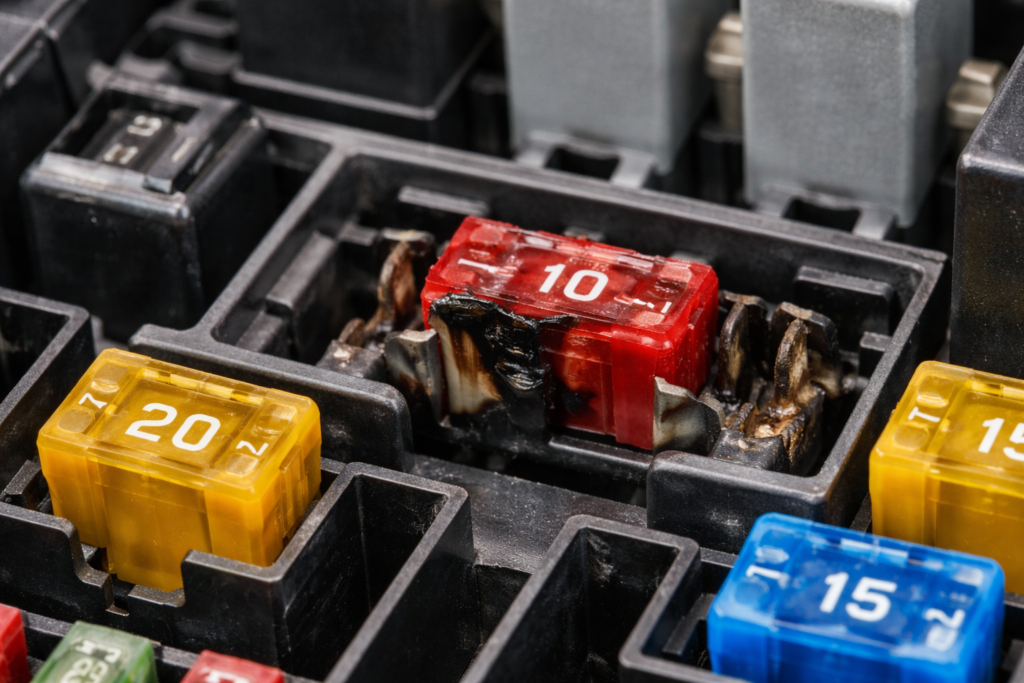
- Plastic housing softens and grips the fuse
- Happens more in older or high-mileage cars
When this happens, the fuse does not just fail; it gets physically stuck inside a softened slot due to heat expansion.
Heat buildup usually comes from voltage drop under load or unstable alternator output, not just high temperature. Sometimes the fuse looks fine from the top, but once you try to pull it, you realize it has fused into the slot underneath.
Does Corrosion Lock Fuse Pins in Place?
In real cases, we mostly see this in cars parked outside for long periods or exposed to moisture.
- Moisture creates rust on metal pins
- Dirt builds up inside fuse slots
- Electrical contact becomes tight and rough
Over time, this creates tight metal bonding that makes the fuse feel locked during removal.
This also increases electrical resistance inside the fuse slot, which leads to slow fuse terminal burnout.
Real Workshop Observation
Most Camry fuse issues we see in workshops are not sudden. They develop slowly over weeks. Drivers usually ignore small signs like dim lights or weak starts until the fuse physically gets stuck or the charging system fails. One thing we often notice is that the fuse does not always feel stuck at first. It moves a little, then suddenly jams. That usually means the plastic inside has already started melting, even if you can not see it clearly.
Another pattern we often see is repeated failure. The fuse gets replaced, works for a few days, then sticks again. That usually confirms the alternator or wiring issue was never fixed. Honestly, this is where most people go wrong. They fix the symptom, not the cause.
How Can You Safely Remove a Stuck Fuse Without Damage?
Removing a stuck fuse needs patience. One wrong move can damage the fuse box.
Is It Safe to Use Pliers on a Stuck Fuse?
In real repairs, we only use pliers as a last option because even a slight pressure error can damage the fuse box permanently.
- Use insulated pliers
- Grip gently, do not twist hard
- Pull straight, not sideways
Too much force can snap or crack the fuse slot.
Can You Remove the Fuse From the Backside?
Yes, but only in some models.
- Some Camry fuse boxes allow backside access
- You can push the fuse out gently
- Requires partial fuse box access
This method is safer when the fuse is melted in place.
When Should You Stop and Avoid Removing the Fuse?

If the fuse does not move with light pressure. At this stage, forcing it usually turns a simple fuse issue into a fuse box replacement job. Forcing it can damage the wiring or the fuse box.
- Fuse feels completely locked
- Plastic looks melted or burned
- The fuse starts breaking while pulling
At this point, in real repairs, we stop immediately. If the fuse is already melted inside, forcing it usually turns a small issue into a full fuse box replacement.
Does a Stuck Fuse Mean You Need to Replace the Fuse Box?
Not always. It depends on the damage level.
| Condition | Action Needed |
| Light corrosion | Clean and reuse |
| Slight melting | Repair the slot carefully |
| Heavy burn damage | Replace the fuse box |
In workshop diagnosis, cleaning or minor repair solves the issue without full replacement.
Can You Repair a Melted Fuse Slot?
Yes, but only for minor damage.
- Clean burnt plastic carefully
- Adjust metal terminals
- Ensure tight contact
If the slot is badly damaged, the repair will not last long.
What Tools Are Safe for Removing a Stuck Fuse?

Using the wrong tool is where most damage happens, not the fuse itself.
- Fuse puller
- Insulated needle-nose pliers
- Small flat screwdriver
Avoid metal tools without insulation, as they can cause short circuits.
What Should You Do After Removing the Stuck Fuse?
Once removed, do not just replace it blindly. Check the root cause first.
- Inspect the fuse slot for damage
- Check alternator output voltage
- Replace with the correct fuse rating
Skipping this step can cause the same problem again within days.
Read Guide: How to Reset Maintenance Light on Toyota Camry?
How Much Does It Cost to Fix a Stuck Alternator Fuse?
| Repair Type | Cost Range (USD) |
| Fuse replacement | $5 to $20 |
| Minor slot repair | $50 to $150 |
| Fuse box replacement | $200 to $600 |
| Alternator repair | $300 to $800 |
In real-world cases, most problems stay under $150 if caught early.
Is DIY Fix Cheaper Than a Mechanic?
Yes, if the issue is simple.
- DIY saves labor costs
- Good for fuse replacement or cleaning
- Risky if electrical damage is involved
If you are unsure, a mechanic is the safer option.
FAQs:
Can a stuck alternator fuse damage my Toyota Camry?
Yes, it can lead to charging issues and may damage wiring if ignored for a long time.
Is it safe to remove a stuck fuse yourself?
Yes, if you use proper tools and avoid forcing it, otherwise it can break the fuse box.
What causes alternator fuse pins to stick in a Camry?
Heat buildup, corrosion, and high electrical load are the most common reasons.
How do I know if the alternator or fuse is the problem?
Test the fuse with a multimeter first, then check the alternator voltage output.
Should I replace the fuse box if the fuse is stuck?
No, only replace it if there is severe melting or permanent slot damage.
Conclusion:
A stuck alternator fuse in a Toyota Camry is usually a sign of a deeper electrical issue, not just a simple fuse problem. Heat, corrosion, and overload are the main causes, and ignoring them can lead to bigger failures. The smart approach is to diagnose step by step, remove the fuse carefully, and fix the root cause. This not only saves money but also prevents repeated damage. Acting early keeps your charging system stable and avoids unnecessary repairs later.